Understanding slope, grade, and cumulative ascent is essential for cyclists, runners, and outdoor enthusiasts seeking to optimize their training and performance on varied terrain.

🏔️ The Mathematics Behind the Mountain: Understanding Slope and Grade
When you’re pushing your limits on a challenging climb, whether cycling up a mountain pass or running through hilly terrain, understanding the incline beneath your feet becomes crucial. Slope and grade are two terms often used interchangeably, yet they represent slightly different ways of measuring the same fundamental concept: how steep your path truly is.
Slope is traditionally expressed as a ratio or percentage that describes the vertical rise over horizontal distance. When civil engineers design roads or trail planners map out routes, they’re constantly calculating these measurements to ensure safety and accessibility. For athletes, these numbers translate directly into effort, pacing strategies, and energy management.
Grade percentage represents the vertical climb per 100 units of horizontal distance. A 10% grade means you’re climbing 10 meters for every 100 meters traveled horizontally. This might sound manageable on paper, but anyone who’s tackled a sustained 10% climb knows the burning sensation in their legs tells a different story. Professional cyclists often face gradients exceeding 15% in mountain stages, while some of the world’s steepest roads reach grades of 35% or more.
Converting Between Different Measurement Systems
Different countries and disciplines use various methods to express incline. Americans might encounter slope expressed as a ratio like 1:10, while Europeans typically see percentage grades. Mathematicians prefer degrees, and some old road signs still use descriptive terms like “steep hill ahead” without numerical precision.
The conversion between these systems is straightforward but important. To convert grade percentage to degrees, you use the arctangent function: degrees = arctan(grade/100). A 10% grade equals approximately 5.7 degrees. This matters because our perception of difficulty doesn’t scale linearly with grade percentage—a 20% grade feels more than twice as hard as a 10% grade.
📊 Why Cumulative Ascent Matters More Than You Think
While instant grade tells you about the immediate challenge, cumulative ascent—the total elevation gained throughout your route—provides the bigger picture of what you’re truly undertaking. Two rides might cover the same distance, but one with 500 meters of climbing versus 2,000 meters presents an entirely different physical and mental challenge.
Cumulative ascent doesn’t account for descents. If you climb 100 meters, descend 50, then climb another 100, your cumulative ascent is 200 meters, not 150. This measurement captures every upward meter your body must work against gravity to achieve. For endurance athletes, this number often predicts completion time and required caloric intake better than distance alone.
Professional race organizers use cumulative ascent as a primary metric when categorizing course difficulty. The Tour de France mountain stages might cover only 150 kilometers but include 4,000+ meters of climbing, making them far more demanding than 200-kilometer flat stages. Trail running events often emphasize vertical gain in their descriptions because experienced runners know this metric reveals the true nature of the challenge.
The Physiological Impact of Accumulated Climbing
Your body responds differently to cumulative climbing compared to flat terrain. Each meter of elevation gain requires additional energy expenditure beyond what distance alone would suggest. Research indicates that climbing consumes approximately 10 times more energy per meter than traveling the same distance horizontally on flat ground.
This energy cost accumulates throughout your activity. The first 500 meters of climbing might feel manageable, but as glycogen stores deplete and muscle fatigue sets in, the final 500 meters of a 3,000-meter climbing day become exponentially more challenging. Understanding this progression helps athletes pace themselves appropriately and fuel strategically.
🚴 Practical Applications for Cyclists
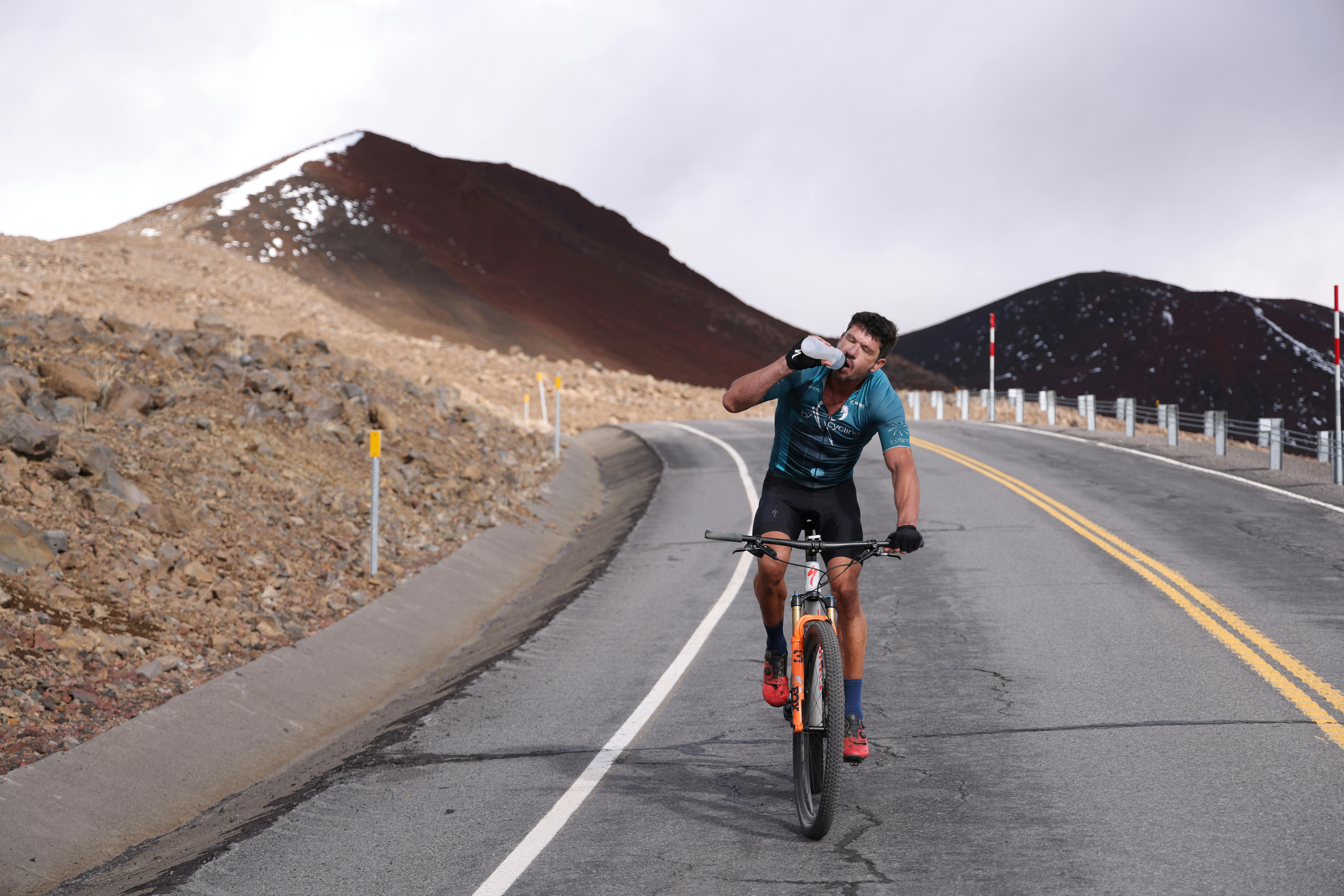
Cyclists benefit enormously from understanding slope dynamics because power output requirements increase dramatically with grade. On flat ground, most cycling effort overcomes air resistance. On steep climbs, fighting gravity becomes the dominant challenge, and aerodynamics matter less while power-to-weight ratio becomes everything.
Professional cyclists often reference VAM (Velocità Ascensionale Media), which measures vertical meters climbed per hour. Elite climbers can sustain VAM values exceeding 1,700 meters per hour on mountain climbs, while recreational cyclists might average 500-800 meters per hour. These numbers provide benchmarks for training and realistic goal-setting.
When planning cycling routes, examining the grade profile helps determine appropriate gearing, pacing strategy, and nutritional needs. A route with consistent 5-7% grades requires different preparation than one featuring short, steep 15% ramps separated by flat sections. The former demands sustained threshold power, while the latter needs repeated anaerobic efforts with recovery intervals.
Training Specifically for Climbing Performance
Improving climbing ability requires targeted training that addresses both physiological and technical aspects. Power-to-weight ratio matters most, meaning cyclists must either increase sustainable power output or reduce body weight—ideally both. However, losing weight must be approached carefully to avoid compromising power production or health.
Structured interval training on climbs develops the specific muscular endurance needed for sustained climbing. Repeating efforts at various grades and durations—from short, steep explosive climbs to longer, moderate gradient sustained efforts—trains the neuromuscular system and energy pathways required for comprehensive climbing competence.
🏃 Running: When Gravity Becomes Your Training Partner
Trail runners face unique challenges related to slope and cumulative ascent. Unlike cyclists who remain seated and can leverage mechanical gearing, runners must repeatedly lift their entire body weight against gravity using muscular force alone. This makes grade percentage feel more severe for runners than cyclists.
Running economy deteriorates significantly on inclines. Studies show that running on a 10% grade requires approximately 50% more energy than running the same speed on flat ground. This explains why pace typically slows dramatically on climbs—maintaining speed would require unsustainable effort that quickly leads to exhaustion.
Smart trail runners adjust their effort, not their pace, when encountering grade changes. The concept of “effort-based training” rather than “pace-based training” becomes essential in mountainous terrain. Maintaining consistent perceived exertion or heart rate across varying grades produces better training stimulus and race performance than stubbornly maintaining pace regardless of terrain.
Hiking Versus Running: Strategic Choices on Steep Grades
On extremely steep grades (typically above 15-20%), many trail runners discover that hiking becomes more efficient than running. The energy cost of maintaining running mechanics on severe inclines exceeds the benefit, and power hiking often allows faster ascent with less fatigue accumulation.
Elite mountain runners develop efficient hiking techniques, using their arms to push off their thighs (a technique called “granny gearing” in the trail community) on the steepest sections. This distributes effort across more muscle groups and maintains forward progress while managing heart rate and breathing. Recognizing when to transition between running and hiking represents advanced tactical awareness that distinguishes experienced mountain athletes.
📱 Technology and Tools for Measuring and Planning
Modern GPS devices and smartphone applications have revolutionized how athletes measure and analyze slope, grade, and cumulative ascent. Barometric altimeters provide reasonably accurate real-time elevation data, while GPS-based elevation calculations improve continuously as satellite systems and algorithms advance.
Popular training platforms allow athletes to analyze grade distribution across their routes—seeing not just total climbing but how that climbing is distributed across various gradient ranges. This granular data helps identify specific weaknesses and design targeted training interventions. If you struggle particularly on 10-15% grades, you can structure workouts specifically addressing that range.
Route planning applications enable athletes to design routes with specific cumulative ascent targets or grade profiles. Want a route with exactly 1,500 meters of climbing? Need to practice sustained efforts on 6-8% grades? These tools make precise training prescription possible, moving beyond generic recommendations toward individualized preparation.
Understanding the Limitations of Technology
Despite technological advances, elevation data contains inherent uncertainty. GPS-based elevation can fluctuate due to satellite geometry, atmospheric conditions, and signal interference. Barometric altimeters are more stable but susceptible to weather changes—a passing storm system can create apparent elevation changes without any actual climbing.
Smart athletes recognize these limitations and focus on trends rather than absolute precision. If your device shows 950 meters versus 1,000 meters of climbing, the difference matters less than understanding the overall magnitude of effort. Comparing routes using the same device and method provides useful relative information even if absolute accuracy remains imperfect.
⚡ Optimizing Performance Through Strategic Pacing
Understanding grade profiles enables sophisticated pacing strategies that optimize performance. On climbs, the temptation to start too aggressively often leads to premature fatigue. Research on optimal climbing pacing suggests that even-effort (not even-pace) approaches typically produce the best results for sustained climbs.
For variable terrain mixing climbs and descents, energy management becomes more complex. Pushing hard on descents exploits momentum and recovers time with relatively less physiological cost compared to climbing. However, excessive descent speed creates impact stress and muscular damage that accumulates over long distances, potentially compromising climbing ability later in the effort.
The concept of “normalized power” or “grade-adjusted pace” helps athletes understand their true effort across varied terrain. These metrics mathematically account for grade variations, providing a single number representing equivalent flat-ground effort. This allows more accurate training load quantification and improved recovery planning.
Fueling Strategy and Cumulative Ascent
Nutritional requirements increase substantially with cumulative ascent. The additional energy cost of climbing demands increased carbohydrate availability, while the extended duration of mountain efforts requires sustained fueling strategies. Athletes tackling routes with significant elevation gain should increase their carbohydrate intake proportionally.
Planning nutrition around the climbing profile makes sense—consuming fuel before and during major climbs ensures glucose availability when demand peaks. On multi-hour mountain efforts, consuming 60-90 grams of carbohydrates per hour helps maintain performance, though individual tolerance varies and requires personal experimentation during training.
🎯 Building Mental Resilience Through Gradient Challenges
Beyond the physical demands, steep grades and substantial cumulative ascent test mental fortitude. Breaking long climbs into manageable segments—focusing on reaching the next switchback rather than obsessing over the distant summit—provides psychological relief and maintains motivation when suffering intensifies.
Experienced mountain athletes develop mental frameworks for managing discomfort on extended climbs. Accepting that climbing hurts, recognizing that discomfort indicates productive training stimulus, and maintaining confidence in preparation all contribute to psychological resilience that complements physical capabilities.
Visualization techniques help prepare mentally for known challenges. If you’re planning an event with a specific difficult climb, studying the gradient profile and mentally rehearsing your approach—where you’ll push, where you’ll recover, how you’ll respond to fatigue—creates mental blueprints that reduce anxiety and improve execution when facing the actual challenge.
🌄 Real-World Examples: Iconic Climbs and Their Characteristics
Some climbs have achieved legendary status among cyclists and runners, their gradient profiles and cumulative statistics becoming benchmarks of achievement. Alpe d’Huez, with its 21 hairpin turns, rises 1,071 meters over 13.2 kilometers for an average grade of 8.1%. Yet this average conceals sections exceeding 13%, where many dreams of cycling glory have faltered.
Mount Washington in New Hampshire presents runners with 1,282 meters of climbing over just 12.4 kilometers during the annual road race, averaging over 10% grade. The final sections approach 22% gradient, reducing even elite runners to hiking pace. The record time of approximately 52 minutes represents extraordinary sustained climbing performance.
These iconic efforts demonstrate how cumulative ascent and gradient combine to create memorable challenges. Neither metric alone tells the complete story—both the total climbing volume and the steepness distribution matter. A 1,000-meter climb on consistent 5% grades presents a different challenge than the same elevation gain concentrated in steep bursts.
🔬 The Science of Efficiency on Inclines
Biomechanical research reveals fascinating insights about human locomotion on grades. Running economy typically peaks on slight downgrades (around -2 to -3%), where gravity assistance partially offsets propulsion requirements. Even modest upgrades significantly increase the metabolic cost per unit distance, with efficiency decreasing exponentially as grade steepens.
Cadence adjustments occur naturally on grades—cyclists typically reduce pedaling cadence on steep climbs while increasing force per pedal stroke. Runners usually shorten stride length and sometimes increase stride frequency, though optimal adjustments vary individually. Listening to your body’s natural adjustments usually proves more effective than forcing predetermined patterns.
Muscular recruitment patterns shift substantially on climbs. Glutes and hamstrings contribute more forcefully during uphill running and cycling, while quadriceps work harder to control descents. Training specifically on grades develops these muscles in sport-specific patterns, improving efficiency and reducing injury risk compared to flat-ground-only training.
🏆 Integrating Incline Training Into Your Program
Progressive overload principles apply to climbing training just as they do to other aspects of fitness development. Beginning with manageable cumulative ascent volumes and moderate grades, then gradually increasing both intensity (steeper grades) and volume (more total climbing) over weeks and months builds climbing-specific fitness while minimizing injury risk.
Periodization helps structure climbing preparation effectively. Base training phases might emphasize volume on moderate grades, building aerobic capacity and muscular endurance. Later phases introduce higher-intensity work on steeper grades, developing the power and lactate tolerance needed for maximum-effort climbing. Tapering before goal events reduces fatigue while maintaining adaptations.
Specificity matters tremendously—if your goal event features long, sustained climbs, your training should include similar efforts. If it presents short, steep ramps requiring repeated hard accelerations, interval training on similar grades prepares you more effectively. Analyzing the specific gradient profile of your goal challenge and designing training that mimics those demands produces superior preparation.
Mastering the interplay between slope, grade, and cumulative ascent transforms how athletes approach training and competition in variable terrain. These metrics provide objective frameworks for understanding effort requirements, planning appropriate preparation, and executing smart pacing strategies. Whether you’re a cyclist eyeing your first mountain sportive or a trail runner preparing for a vertical kilometer, deep understanding of these fundamental concepts elevates your performance potential and transforms suffering into strategic challenge management.