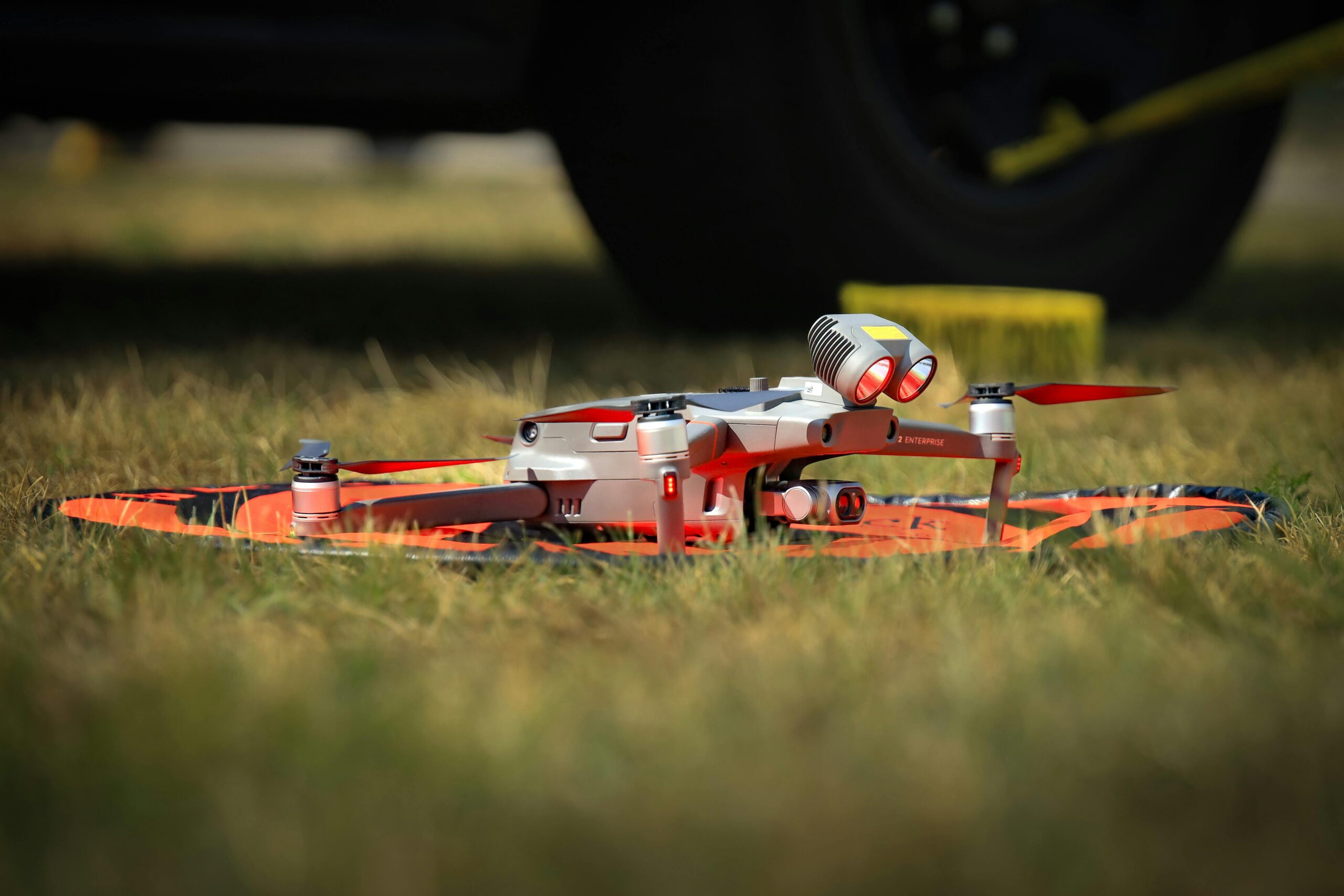
Drones are revolutionizing industries from agriculture to infrastructure inspection, and real-time SLAM (Simultaneous Localization and Mapping) has become the cornerstone technology enabling autonomous navigation in GPS-denied environments.

🚁 The Evolution of Drone Navigation: Why SLAM Matters
Traditional GPS-based navigation systems have served drones well in open outdoor environments, but they fall short when operating indoors, under bridges, in dense forests, or urban canyons. This is where SLAM technology becomes indispensable. Real-time SLAM allows drones to construct maps of unknown environments while simultaneously tracking their position within those maps—all without external positioning systems.
The computational challenges of implementing SLAM on resource-constrained aerial platforms are significant. Unlike ground robots, drones must process sensor data and execute SLAM algorithms within strict power and weight budgets while maintaining stable flight. This has driven remarkable innovations in efficient algorithm design and sensor fusion techniques.
Modern SLAM systems for drones typically fall into three main categories: visual SLAM, LiDAR-based SLAM, and visual-inertial SLAM. Each approach offers distinct advantages and trade-offs in terms of accuracy, computational requirements, robustness, and environmental suitability.
Visual SLAM: Leveraging Camera Intelligence 📸
Visual SLAM systems use cameras as the primary sensor for environment perception and pose estimation. The appeal of camera-based approaches lies in their lightweight hardware, low power consumption, and rich semantic information capture capabilities.
Core Components of Visual SLAM Pipelines
A typical visual SLAM pipeline consists of several interconnected modules working in concert. Feature extraction identifies distinctive points in camera images—corners, edges, and texture patterns that can be reliably detected across multiple frames. Feature matching then establishes correspondence between features observed in different images, enabling the system to track how the camera has moved.
Pose estimation calculates the drone’s position and orientation based on feature correspondences, while mapping builds a three-dimensional representation of the environment. Loop closure detection identifies when the drone revisits previously mapped areas, allowing the system to correct accumulated drift errors.
Popular Visual SLAM Frameworks for Drones
ORB-SLAM3 has emerged as one of the most robust visual SLAM systems, offering real-time performance with monocular, stereo, and RGB-D cameras. Its ability to handle dynamic environments and perform efficient relocalization makes it particularly suitable for drone applications where lighting conditions and scene content vary dramatically.
DSO (Direct Sparse Odometry) takes a different approach by operating directly on pixel intensities rather than extracted features. This direct method offers improved accuracy in texture-poor environments where traditional feature-based methods struggle. However, it requires more computational resources and careful photometric calibration.
SVO (Semi-direct Visual Odometry) strikes a balance between feature-based and direct methods, achieving exceptional speed by tracking features at the pixel level while maintaining sparse 3D structure. This efficiency makes SVO particularly attractive for embedded drone platforms with limited processing power.
Challenges in Visual SLAM for Aerial Platforms
Visual SLAM systems face unique challenges when deployed on drones. Rapid motion and aggressive maneuvers create motion blur that degrades feature detection quality. Changing lighting conditions—from bright sunlight to shadowed areas—affect photometric consistency assumptions. Texture-poor environments like blank walls or uniform surfaces provide insufficient visual features for reliable tracking.
Furthermore, the limited field of view of cameras means features quickly move out of frame during fast flight, requiring robust strategies for maintaining tracking continuity. Scale ambiguity in monocular systems presents another hurdle, as the absolute scale of the environment cannot be determined from images alone.
LiDAR-Based SLAM: Precision Through Point Clouds ⚡
LiDAR (Light Detection and Ranging) sensors measure distances by timing laser pulse returns, generating precise three-dimensional point clouds of the surrounding environment. LiDAR-based SLAM offers distinct advantages in challenging visual conditions and provides direct metric scale information.
LiDAR Technology Types for Drones
Mechanical scanning LiDARs use rotating mechanisms to sweep laser beams across the environment, capturing dense 360-degree point clouds. While offering excellent coverage, their mechanical components add weight and power consumption, making them less ideal for smaller drones.
Solid-state LiDARs eliminate moving parts through technologies like MEMS mirrors or optical phased arrays, reducing size, weight, and power requirements. These compact sensors are increasingly popular for consumer and professional drones, though they typically offer narrower fields of view than mechanical alternatives.
Flash LiDARs illuminate entire scenes simultaneously, capturing full-frame depth images at high frame rates. Their compact form factor and lack of moving parts make them attractive for lightweight drone platforms, though range and resolution are typically more limited than scanning systems.
Leading LiDAR SLAM Algorithms
LOAM (LiDAR Odometry and Mapping) pioneered real-time LiDAR SLAM by separating odometry estimation and mapping into parallel processes running at different frequencies. This decoupling enables real-time performance while maintaining high-quality maps. Variants like LeGO-LOAM add ground plane detection and segmentation for improved efficiency and robustness.
LINS (LiDAR-Inertial State Estimator) tightly couples LiDAR measurements with IMU data through an iterated error-state Kalman filter. This fusion approach provides robust state estimation even during aggressive drone maneuvers when LiDAR point clouds become sparse or degraded.
FAST-LIO2 represents the cutting edge of LiDAR-inertial odometry, using incremental k-d tree updates and direct point cloud registration to achieve remarkable computational efficiency. Its ability to process thousands of points per frame in real-time makes it ideal for high-resolution LiDAR sensors on embedded drone computers.
Advantages and Limitations of LiDAR SLAM
LiDAR systems excel in low-light or dark environments where cameras fail, providing consistent performance regardless of illumination conditions. The direct metric measurements eliminate scale ambiguity issues inherent to monocular vision, while the wide field of view of rotating LiDARs facilitates robust tracking during aggressive maneuvers.
However, LiDAR-based SLAM comes with trade-offs. The sensors typically cost more and consume more power than cameras. In environments with reflective surfaces, transparent materials, or highly dynamic elements, LiDAR measurements can become unreliable. Additionally, the sparse semantic information in point clouds makes high-level scene understanding more challenging compared to rich visual imagery.
Visual-Inertial Fusion: The Best of Both Worlds 🎯
Visual-inertial odometry (VIO) combines cameras with inertial measurement units (IMUs) to leverage the complementary strengths of both sensor modalities. IMUs provide high-frequency motion measurements that fill gaps between camera frames, while visual observations correct IMU drift and establish global consistency.
Filter-Based Visual-Inertial Approaches
MSCKF (Multi-State Constraint Kalman Filter) maintains a sliding window of recent camera poses in its state vector while marginalizing out feature observations. This approach provides computational efficiency by avoiding explicit feature state maintenance, making it suitable for resource-constrained platforms.
ROVIO (Robust Visual Inertial Odometry) takes a unique approach by directly updating patch intensities in the filter state rather than extracted feature positions. This photometric formulation offers improved accuracy in structured environments while maintaining real-time performance on embedded processors.
Optimization-Based Visual-Inertial Systems
VINS-Mono performs tightly-coupled optimization of visual and inertial measurements through a sliding-window bundle adjustment framework. Its loop closure module enables global consistency, while relocalization capabilities allow recovery from tracking failures. The open-source implementation has become widely adopted in research and commercial drone applications.
OKVIS (Open Keyframe-based Visual-Inertial SLAM) implements a keyframe-based optimization approach that maintains a selected subset of frames for bundle adjustment. This selective approach balances computational efficiency with estimation accuracy, enabling deployment on embedded platforms.
Kimera represents a more recent advancement, extending visual-inertial odometry with metric-semantic mesh reconstruction and real-time 3D scene graphs. This semantic understanding enables higher-level reasoning for autonomous navigation and human-robot interaction.
Why Visual-Inertial Fusion Works So Well
The synergy between cameras and IMUs addresses fundamental limitations of each sensor individually. IMUs provide metric scale information that resolves monocular vision ambiguity. High-rate IMU measurements bridge gaps during rapid motion when visual tracking fails or features blur. Visual observations constrain IMU drift that would otherwise accumulate unbounded errors over time.
Furthermore, the complementary failure modes of the two sensors enhance overall system robustness. When visual tracking degrades in texture-poor regions, IMU predictions maintain pose estimates. When IMU biases drift during extended hover, visual measurements provide corrections. This redundancy proves invaluable for safety-critical drone operations.
Implementation Considerations for Drone Platforms 🔧
Computational Hardware Selection
Modern SLAM algorithms demand significant computational resources, requiring careful hardware selection. Embedded GPU platforms like NVIDIA Jetson series offer excellent performance-per-watt for vision processing, with CUDA acceleration supporting parallel feature extraction and matching operations.
For ultra-lightweight applications, specialized vision processing units (VPUs) like Intel Movidius provide hardware-accelerated neural network inference and computer vision primitives in compact, power-efficient packages. However, their specialized architectures may require algorithm modifications to fully leverage available computational resources.
Some drones employ hybrid architectures, distributing SLAM computation between onboard embedded processors for real-time tracking and ground station workstations for more computationally intensive mapping and optimization tasks. This offloading strategy enables deployment of sophisticated algorithms on weight-constrained platforms.
Sensor Configuration and Calibration
Proper sensor calibration forms the foundation of accurate SLAM performance. Camera intrinsic parameters—focal length, principal point, and distortion coefficients—must be precisely determined through calibration procedures using checkerboard or similar patterns.
For stereo or multi-camera systems, extrinsic calibration establishing relative poses between cameras becomes critical. Even small calibration errors can degrade triangulation accuracy and introduce systematic biases in depth estimation.
Visual-inertial systems require additional spatial-temporal calibration determining the transformation between camera and IMU frames as well as the temporal offset between their measurements. Online calibration algorithms can refine these parameters during operation, adapting to thermal effects and mechanical deformations.
Software Architecture and Integration
Modular software architectures facilitate rapid prototyping and algorithm comparison. ROS (Robot Operating System) has become the de facto standard framework for robotics research, providing standardized message formats, visualization tools, and a vast ecosystem of packages. ROS2 offers improved real-time performance and quality-of-service guarantees important for safety-critical applications.
For production deployments, custom middleware may offer advantages in footprint, latency, and reliability. Lightweight frameworks minimize overhead, while carefully designed interfaces enable component-level testing and validation essential for certification in commercial applications.
Performance Evaluation and Benchmarking 📊
Rigorous performance evaluation guides algorithm selection and tuning for specific applications. Standard benchmark datasets like EuRoC, TUM-VI, and UZH-FPV provide ground truth trajectories for quantitative accuracy assessment across diverse scenarios.
Absolute Trajectory Error (ATE) measures the Euclidean distance between estimated and ground truth poses after optimal alignment, capturing overall navigation accuracy. Relative Pose Error (RPE) evaluates consistency over specific time intervals or distances, revealing drift characteristics important for long-duration missions.
Beyond accuracy metrics, real-world deployment requires assessment of robustness, computational efficiency, and power consumption. Failure rate under challenging conditions, processing latency, CPU utilization, and battery life all influence practical usability for drone applications.
Real-World Applications Transforming Industries 🌍
Autonomous warehouse inventory management leverages indoor SLAM-enabled drones to scan barcodes and verify stock locations without GPS. Visual-inertial systems provide the precision necessary to navigate narrow aisles and maintain stable position for barcode scanning.
Infrastructure inspection applications deploy LiDAR SLAM for detailed 3D modeling of bridges, towers, and industrial facilities. The metric accuracy and geometric detail of LiDAR point clouds enable precise defect detection and structural health monitoring without scaffolding or rope access.
Search and rescue operations benefit from SLAM-enabled drones that can enter collapsed buildings or disaster zones where GPS signals are unavailable. Real-time mapping helps coordinate multiple units and provides situational awareness to incident commanders.
Agricultural monitoring applications use visual SLAM for precise crop surveys and plant-level phenotyping. The semantic richness of visual data enables identification of disease symptoms, growth anomalies, and yield estimation while maintaining centimeter-level positioning accuracy.
Emerging Trends and Future Directions 🚀
Machine learning is increasingly being integrated into SLAM pipelines, with deep neural networks handling feature extraction, descriptor computation, and place recognition. Learned approaches promise improved robustness to challenging conditions and adaptation to specific operational domains.
Multi-agent collaborative SLAM enables teams of drones to jointly construct maps and share localization information. Distributed optimization algorithms and efficient communication protocols allow scalable mapping of large areas while maintaining real-time performance.
Event cameras represent an emerging sensor modality offering microsecond temporal resolution and high dynamic range. Event-based SLAM algorithms exploit these unique characteristics for robust tracking during extremely fast motion and in challenging lighting conditions where conventional cameras fail.
Semantic SLAM extends geometric mapping with object-level understanding, recognizing doors, windows, vegetation, and other scene elements. This semantic layer enables higher-level reasoning about navigability, occlusion, and context-aware path planning for autonomous missions.
Overcoming Current Limitations and Practical Challenges ⚙️
Dynamic environments containing moving objects pose ongoing challenges for most SLAM systems designed assuming static scenes. Advanced algorithms incorporate motion segmentation to identify and filter dynamic elements, while others explicitly model and track moving objects within the framework.
Long-term operation requires addressing appearance changes from varying weather, seasonal vegetation, and lighting conditions. Lifelong SLAM approaches continuously update maps and maintain multiple appearance models to handle these variations without catastrophic failure.
Regulatory compliance for beyond-visual-line-of-sight (BVLOS) operations demands proven reliability and safety. Formal verification methods, redundant sensor configurations, and fail-safe modes are being developed to meet stringent certification requirements for commercial autonomous drone deployments.

Building Robust Systems: Best Practices and Recommendations 💡
Start with established open-source implementations rather than building from scratch unless specific requirements demand custom solutions. Proven frameworks like ORB-SLAM3, FAST-LIO2, and VINS-Fusion provide solid foundations that can be adapted to particular needs.
Invest significant effort in sensor calibration and characterization. Poor calibration undermines even the most sophisticated algorithms, while well-calibrated systems enable simpler algorithms to achieve excellent performance.
Implement comprehensive logging and visualization tools early in development. The ability to replay and analyze sensor data offline accelerates debugging and algorithm tuning far more effectively than real-time field testing alone.
Design for graceful degradation rather than brittle optimal performance. Real-world deployment inevitably encounters edge cases and challenging conditions not represented in development datasets. Robust tracking recovery, outlier rejection, and uncertainty quantification separate laboratory demonstrations from production-ready systems.
The field of real-time SLAM for drones continues advancing rapidly, driven by improvements in sensor technology, computational hardware, and algorithmic innovation. Whether deploying visual, LiDAR, or visual-inertial approaches, understanding the fundamental trade-offs and implementation considerations enables building systems that unlock autonomous capabilities across countless applications. As these technologies mature and costs decrease, SLAM-enabled drones will become increasingly ubiquitous, transforming industries and creating opportunities we have yet to imagine.