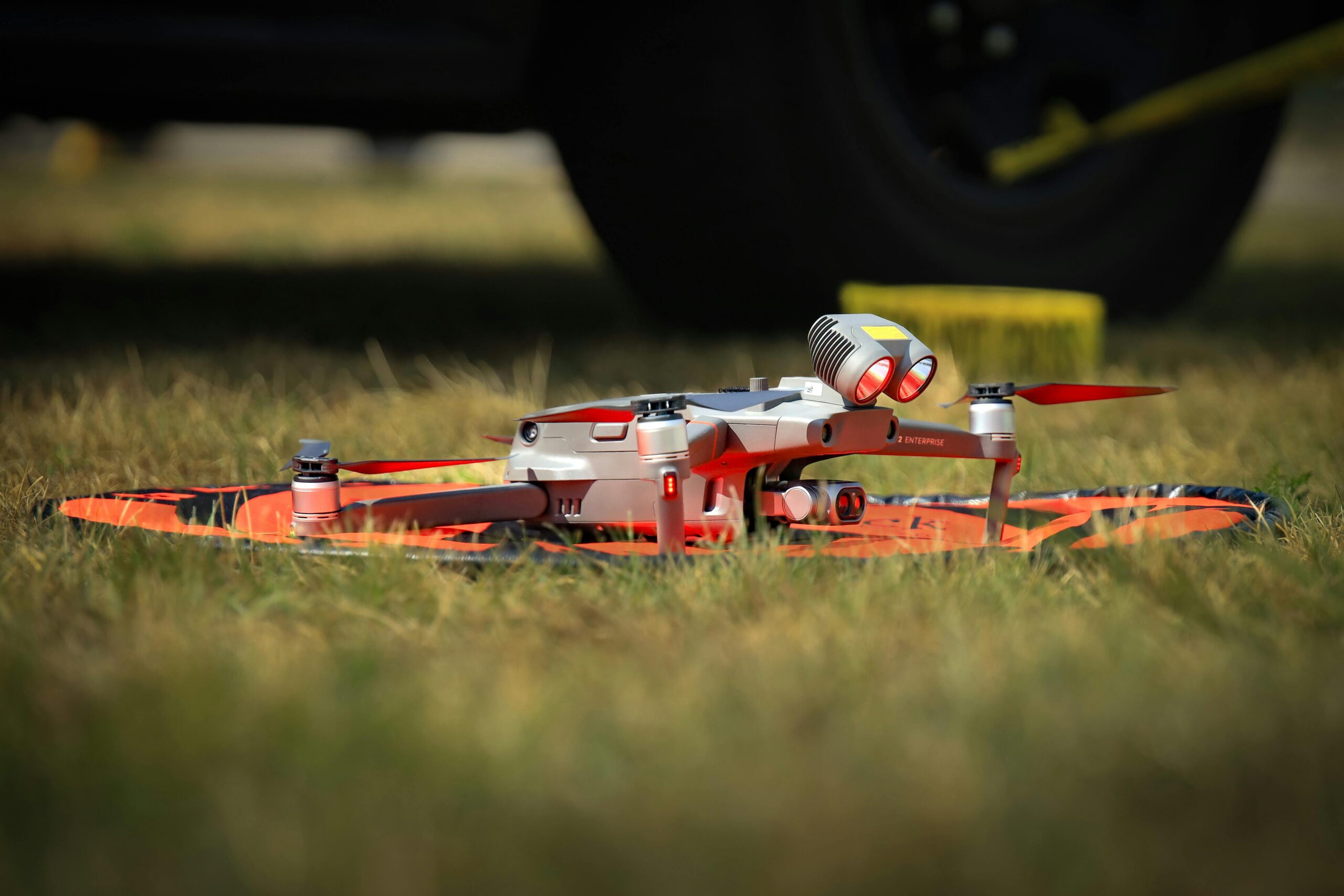
Modern aerial mapping demands unprecedented accuracy, and RTK/PPK GNSS technologies have revolutionized how professionals achieve centimeter-level precision in georeferencing workflows.

🛰️ The Evolution of Aerial Mapping Accuracy
The journey from traditional surveying methods to advanced drone-based mapping systems represents one of the most significant technological leaps in geospatial sciences. For decades, professionals relied on ground control points (GCPs) scattered across survey areas, manually measuring each position to ensure mapping accuracy. This process was time-consuming, labor-intensive, and often required multiple site visits.
Today’s RTK (Real-Time Kinematic) and PPK (Post-Processing Kinematic) GNSS technologies have transformed this landscape entirely. These systems enable aerial mapping with remarkable precision, often eliminating the need for extensive ground control networks while delivering centimeter-level accuracy that was once unimaginable outside laboratory conditions.
The implications extend far beyond convenience. Projects that previously required weeks of fieldwork can now be completed in days. Cost structures have fundamentally changed, making high-precision mapping accessible to smaller organizations. Most importantly, the accuracy and reliability of spatial data have reached levels that support critical infrastructure decisions, legal boundary determinations, and precision agriculture applications.
Understanding RTK and PPK: Two Paths to Precision
While both RTK and PPK technologies deliver exceptional georeferencing accuracy, they achieve this goal through distinctly different methodologies. Understanding these differences is crucial for selecting the appropriate approach for specific project requirements.
Real-Time Kinematic (RTK): Instant Accuracy in the Field
RTK GNSS operates by establishing a radio communication link between a base station at a known location and a rover receiver mounted on your drone. The base station continuously calculates positioning errors by comparing its known position with satellite signals, then broadcasts real-time corrections to the rover.
This approach provides immediate positioning accuracy during flight operations. As your drone captures images, each photograph is tagged with centimeter-accurate coordinates instantly. The immediate feedback allows operators to verify data quality in the field, ensuring complete coverage and acceptable accuracy before leaving the survey site.
However, RTK systems require maintaining constant radio communication throughout the flight. Signal interruptions from terrain features, buildings, or distance limitations can compromise accuracy. Additionally, establishing and calibrating the base station adds setup time to each mission.
Post-Processing Kinematic (PPK): Refined Precision After Flight
PPK takes a different approach by logging raw GNSS observations during flight without requiring real-time corrections. The drone records its approximate trajectory while capturing images, and both datasets are synchronized through precise timestamps.
After landing, specialized software processes the raw GNSS data alongside observations from base stations or continuously operating reference stations (CORS). This post-processing applies corrections retroactively, calculating precise positions for each image capture moment.
The PPK workflow offers significant advantages in challenging environments. Without dependence on real-time radio links, operators can survey larger areas, work in radio-restricted zones, and avoid communication dropouts. The post-processing approach also allows for more sophisticated error modeling and quality control procedures.
⚙️ Technical Foundation: How GNSS Positioning Achieves Centimeter Accuracy
Understanding the technical principles underlying RTK and PPK systems helps practitioners optimize their workflows and troubleshoot accuracy issues effectively.
Standard GNSS positioning relies on measuring the time required for signals to travel from satellites to receivers. While this provides position information, atmospheric interference, satellite orbit uncertainties, and clock errors introduce positioning errors of several meters.
RTK and PPK overcome these limitations through differential correction techniques. By comparing observations from two receivers simultaneously tracking the same satellites, most common errors cancel out. The key lies in resolving carrier phase ambiguities—determining the exact number of signal wavelengths between satellites and receivers.
Modern multi-frequency, multi-constellation receivers track signals from GPS, GLONASS, Galileo, and BeiDou satellites simultaneously. This redundancy dramatically improves reliability and reduces the time required to achieve fixed solutions, where carrier phase ambiguities are resolved with certainty.
The Critical Role of Base Station Positioning
The accuracy of your final georeferenced data depends fundamentally on knowing the precise position of your base station or reference station. An error in base station coordinates translates directly into systematic errors across your entire survey.
Professional workflows employ several strategies for establishing accurate base positions. Static GNSS observations over known survey monuments provide the highest confidence. Alternatively, connecting to established CORS networks eliminates base station setup while providing rigorously maintained reference coordinates.
For projects requiring absolute positional accuracy rather than relative precision, careful base station establishment becomes non-negotiable. However, many applications prioritize internal consistency within a survey, where relative accuracy between features matters more than absolute positioning in a global reference frame.
🎯 Implementing RTK/PPK in Aerial Mapping Workflows
Successful integration of RTK or PPK GNSS into aerial mapping operations requires attention to equipment selection, mission planning, and data processing procedures. Each phase presents opportunities to maximize accuracy and efficiency.
Equipment Configuration and Calibration
The foundation of accurate georeferencing begins with proper equipment setup. Modern mapping drones equipped with RTK/PPK capabilities feature integrated GNSS receivers positioned precisely relative to camera sensors. Understanding this offset relationship is crucial, as photogrammetric software must account for the physical separation between GNSS antenna and camera lens.
Manufacturers typically provide offset measurements, but field verification ensures these values remain accurate after transport, repairs, or modifications. Some advanced systems include multiple GNSS antennas for improved heading determination and orientation accuracy, further enhancing georeferencing precision.
Regular calibration routines maintain system performance over time. Camera calibration parameters, including focal length, lens distortion coefficients, and principal point position, interact with GNSS positioning to determine final accuracy. Scheduling periodic calibration flights over test ranges with known dimensions validates overall system performance.
Mission Planning for Optimal GNSS Performance
While RTK and PPK systems dramatically improve positioning accuracy, mission planning significantly influences final results. Flight planning should consider satellite geometry, potential interference sources, and operational constraints.
Optimal GNSS performance occurs with clear sky visibility across the full hemisphere above the receiver. Surveying near tall structures, under tree canopy, or during limited satellite availability degrades positioning quality. Mission planning tools that incorporate satellite visibility predictions help identify optimal flight windows.
Flight altitude, speed, and image overlap parameters interact with GNSS positioning to determine achievable accuracy. Higher altitudes reduce ground resolution but may improve satellite visibility. Increased overlap provides redundancy that helps photogrammetric processing compensate for occasional positioning errors.
📊 Data Processing: Transforming Raw Positions into Accurate Maps
Collecting georeferenced images represents only the first step toward producing accurate mapping deliverables. Post-processing workflows integrate GNSS observations with photogrammetric techniques to generate orthomosaics, elevation models, and three-dimensional reconstructions.
Processing PPK Data: From Raw Logs to Precise Coordinates
PPK workflows begin with downloading raw GNSS observation files from both the drone and base station or reference network. Specialized software processes these observations together, calculating precise positions for each image exposure moment.
Quality assessment during PPK processing identifies potential issues before investing time in photogrammetric calculations. Solution status indicators reveal whether positions achieved fixed ambiguity resolution or relied on lower-accuracy float solutions. Position precision estimates help identify problematic epochs that may require closer examination.
Modern PPK software often generates output files directly compatible with photogrammetry applications, embedding precise coordinates into image metadata or creating separate geolocation files. This seamless integration streamlines workflows and reduces opportunities for coordinate system confusion or data handling errors.
Photogrammetric Processing with High-Accuracy Georeferencing
Importing accurately georeferenced images into photogrammetry software fundamentally changes processing workflows compared to traditional approaches. With centimeter-level position information for every image, software can initialize bundle adjustment processes near optimal solutions, dramatically improving reliability and reducing computation time.
However, maximizing georeferencing accuracy requires careful configuration of processing parameters. Geolocation accuracy settings inform the software about expected coordinate precision, allowing appropriate weighting during bundle adjustment. Overestimating position accuracy can lead to distorted results, while underestimating it fails to leverage the full value of RTK/PPK data.
Most professional photogrammetry packages support direct georeferencing modes that rely primarily on GNSS positions with minimal or no ground control points. This approach works exceptionally well for achieving relative accuracy within individual surveys. For projects requiring absolute accuracy or integration with existing datasets, strategic placement of a few verification checkpoints validates overall accuracy.
🔍 Accuracy Assessment and Quality Control
Professional mapping workflows incorporate rigorous quality control procedures to verify that deliverables meet specified accuracy standards. RTK and PPK technologies enable impressive precision, but systematic verification protects against equipment malfunctions, processing errors, or workflow mistakes.
Checkpoint Analysis and Statistical Validation
Independent checkpoints measured with survey-grade equipment provide ground truth for accuracy assessment. Strategic distribution of checkpoints across the survey area and throughout the elevation range reveals systematic errors or spatial variations in accuracy.
Statistical analysis of checkpoint residuals quantifies overall accuracy using metrics like root mean square error (RMSE) for horizontal and vertical components. Professional standards often specify different accuracy requirements for horizontal and vertical dimensions, reflecting the greater challenge of elevation determination in photogrammetric workflows.
Beyond simple RMSE calculations, examining individual checkpoint errors reveals patterns that may indicate specific problems. Systematic horizontal shifts suggest coordinate system issues or base station positioning errors. Elevation biases might indicate incorrect camera calibration parameters or flight altitude determination problems.
Internal Consistency Checks
Photogrammetry software generates valuable diagnostic information during processing that helps assess data quality. Reprojection errors indicate how well the geometric model explains observed image positions of tie points. Excessively large reprojection errors suggest problems with camera calibration, image quality, or georeferencing accuracy.
Comparing GNSS-derived positions with bundle adjustment results reveals inconsistencies between positioning data and photogrammetric observations. Small discrepancies are normal and expected, but large systematic differences warrant investigation before proceeding to final deliverable generation.
💡 Advanced Techniques for Maximizing Accuracy
Beyond standard RTK and PPK implementations, advanced practitioners employ sophisticated techniques to extract maximum accuracy from georeferencing systems, particularly for demanding applications.
Multi-Baseline PPK Processing
Rather than relying on a single base station, advanced PPK workflows incorporate observations from multiple reference stations simultaneously. This approach improves reliability by providing redundant solutions and can enhance accuracy through network-based corrections that model spatial variations in atmospheric conditions.
Regional CORS networks make multi-baseline processing practical for many applications. Processing software automatically selects optimal reference stations based on distance, observation quality, and geometric distribution, maximizing positioning accuracy without requiring additional field equipment.
Integration with Inertial Measurement Systems
High-end mapping systems combine GNSS receivers with inertial measurement units (IMUs) that track acceleration and rotation. This sensor fusion provides continuous position and orientation information even during brief GNSS outages or in challenging signal environments.
Tightly coupled GNSS/IMU integration produces more accurate camera orientations than GNSS positioning alone. Improved orientation parameters enhance photogrammetric accuracy, particularly for vertical surfaces and features at the edges of image coverage where geometric constraints are weakest.
🌍 Real-World Applications Driving Accuracy Requirements
Understanding practical applications helps contextualize accuracy requirements and justify investments in RTK/PPK technology. Different industries prioritize various aspects of georeferencing precision.
Precision Agriculture and Crop Management
Modern agriculture increasingly relies on spatially precise data for variable rate applications of seeds, fertilizers, and pesticides. Centimeter-level accuracy enables prescription maps that target specific crop zones, optimizing inputs while minimizing environmental impact.
Temporal analysis of crop health requires consistent georeferencing across multiple flights throughout growing seasons. RTK and PPK systems provide the positional consistency necessary for detecting subtle changes in vegetation indices at individual plant levels.
Infrastructure Inspection and Monitoring
Critical infrastructure monitoring demands accurate change detection over time. Power transmission corridors, pipelines, and transportation networks require periodic surveys to identify encroachment, structural movement, or deterioration.
High-accuracy georeferencing enables automated change detection algorithms to distinguish real infrastructure changes from positioning inconsistencies between surveys. This automation dramatically reduces manual interpretation time while improving detection reliability for subtle but significant changes.
Legal Boundaries and Property Surveys
While aerial mapping typically cannot replace traditional boundary surveys for legal purposes, high-accuracy georeferencing provides valuable supplementary documentation. Property developers, municipalities, and land managers use accurately georeferenced aerial data for planning, encroachment detection, and boundary verification.
The absolute accuracy provided by properly established RTK/PPK systems enables direct comparison with recorded survey coordinates, cadastral databases, and property descriptions. This integration supports informed decision-making while identifying potential boundary issues that warrant professional survey investigation.
🚀 Future Directions in Georeferencing Technology
The evolution of GNSS technology and aerial mapping systems continues to advance, promising further improvements in accuracy, reliability, and accessibility.
New satellite constellations coming online increase the number of visible satellites, improving geometric strength and reducing time to fixed solutions. Additional signal frequencies enable better atmospheric error modeling, particularly beneficial for longer baseline PPK processing.
Miniaturization and cost reduction make RTK/PPK capabilities accessible to smaller drone platforms and broader user communities. Technologies once reserved for specialized professional systems now appear in consumer-grade equipment, democratizing access to precision georeferencing.
Artificial intelligence and machine learning algorithms are beginning to enhance positioning accuracy through improved error modeling, automated quality assessment, and intelligent sensor fusion. These developments promise to make high-accuracy georeferencing more robust and user-friendly, reducing the specialized expertise required for optimal results.
Building Confidence Through Understanding
Mastering RTK and PPK GNSS technologies for aerial mapping represents more than learning new equipment operation. True proficiency requires understanding the underlying principles, recognizing quality indicators, and developing judgment about when different approaches best serve project objectives.
The journey toward consistently achieving centimeter-level accuracy involves practical experience, careful attention to workflow details, and systematic quality control. Success comes from recognizing that multiple factors interact to determine final accuracy—no single component guarantees results.
Starting with solid fundamentals in GNSS positioning, photogrammetry, and survey principles provides the foundation for troubleshooting problems and optimizing workflows. As experience grows, practitioners develop intuition about expected performance under various conditions and efficiently identify when results deviate from expectations.
The investment in understanding these technologies pays dividends through improved data quality, increased confidence in deliverables, and the ability to undertake more demanding projects. Whether supporting precision agriculture, infrastructure monitoring, or detailed topographic mapping, mastery of RTK and PPK georeferencing unlocks capabilities that redefine what’s possible in aerial mapping applications.
By embracing these technologies thoughtfully and implementing them with attention to technical details, today’s geospatial professionals create mapping products that meet the increasingly demanding accuracy requirements of modern applications while delivering efficiency gains that traditional methods cannot match.