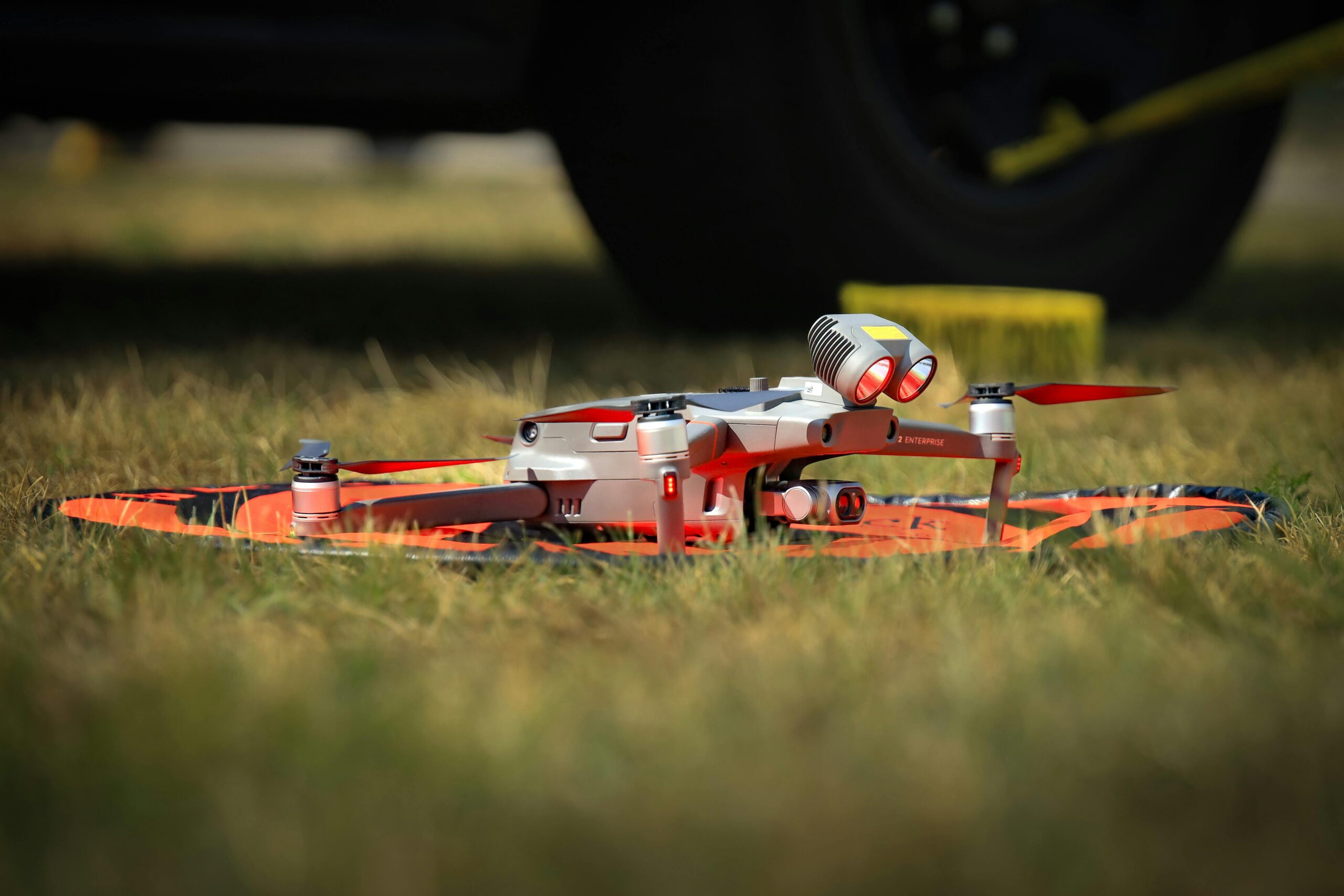
Autonomous mission planning has revolutionized how unmanned systems complete coverage tasks, from agricultural surveillance to search-and-rescue operations, demanding strategic approaches for maximum efficiency.

🚁 Understanding the Foundation of Coverage Path Planning
Coverage path planning represents a critical challenge in robotics and autonomous systems. The fundamental objective involves designing paths that enable unmanned vehicles—whether aerial, ground-based, or marine—to systematically cover a designated area while optimizing key performance metrics. These metrics typically include mission duration, energy consumption, and completeness of coverage.
Modern autonomous systems require sophisticated algorithms that can adapt to environmental constraints, operational limitations, and mission-specific requirements. The selection of an appropriate coverage strategy directly impacts the success rate of operations ranging from precision agriculture and environmental monitoring to infrastructure inspection and disaster response scenarios.
Three primary strategies have emerged as industry standards: boustrophedon patterns, spiral approaches, and adaptive re-planning methodologies. Each offers distinct advantages depending on the operational context, terrain characteristics, and mission objectives. Understanding these strategies enables operators to maximize efficiency while minimizing resource expenditure.
🔄 Boustrophedon Pattern: The Systematic Workhorse
The boustrophedon pattern, named after the ancient Greek writing style that alternates direction with each line, represents one of the most widely implemented coverage strategies. This approach involves covering an area through parallel back-and-forth sweeps, similar to how a farmer plows a field or a lawnmower cuts grass.
Mechanics of Boustrophedon Coverage
The boustrophedon method divides the target area into parallel strips of equal width, determined by the sensor footprint or operational swath of the autonomous vehicle. The vehicle traverses each strip completely before moving to the adjacent parallel path, alternating direction to minimize non-productive transition movements.
This systematic approach offers several compelling advantages. First, it provides predictable coverage with straightforward implementation requiring minimal computational overhead. Second, the pattern naturally accommodates rectangular or convex polygonal areas with high efficiency. Third, mission progress can be easily tracked and visualized, facilitating real-time monitoring and intervention if necessary.
Optimizing Boustrophedon Implementation
Maximizing efficiency with boustrophedon patterns requires careful consideration of sweep direction. The optimal orientation typically aligns the longest dimension of the coverage area with the sweep direction, minimizing the number of turns and transition maneuvers. These transitions represent non-productive time that increases mission duration without contributing to coverage objectives.
Advanced implementations incorporate decomposition strategies for complex polygonal areas. Cellular decomposition breaks irregular shapes into simpler sub-regions, each covered with optimized boustrophedon patterns. This approach maintains the efficiency benefits while extending applicability to real-world scenarios with obstacles and irregular boundaries.
Energy consumption considerations also influence boustrophedon optimization. For aerial vehicles, maintaining constant altitude and minimizing aggressive maneuvers during transitions conserves battery life. Ground vehicles benefit from path orientations that align with terrain slopes, reducing power requirements for uphill movements.
🌀 Spiral Patterns: Centripetal Coverage Strategies
Spiral coverage patterns offer an alternative approach particularly suited for specific operational scenarios. Unlike the linear back-and-forth nature of boustrophedon patterns, spiral strategies involve progressive movement either inward from the perimeter or outward from a central point.
Inward vs Outward Spiral Approaches
Inward spirals begin at the area perimeter and progressively move toward the center. This approach proves advantageous when the operational priority involves securing boundaries first or when external threats necessitate working from known safe zones inward. Search-and-rescue missions often employ inward spirals to establish secure perimeters before focusing on interior regions.
Outward spirals commence at a central deployment point and expand concentrically. This strategy suits scenarios where the autonomous vehicle launches from within the target area or when priority coverage zones exist at the center. Environmental monitoring around point sources of contamination benefits from outward spiral patterns that characterize dispersion from the epicenter.
Efficiency Considerations for Spiral Coverage
Spiral patterns naturally accommodate circular or near-circular coverage areas with minimal wasted motion. The continuous curved path eliminates the sharp turns required by boustrophedon approaches, potentially reducing wear on mechanical systems and enabling smoother sensor data collection.
However, spiral patterns introduce challenges for rectangular areas. The curved paths result in repeated coverage near corners and edges, reducing overall efficiency compared to rectilinear strategies. Additionally, maintaining consistent spacing between spiral arms requires precise navigation and control, particularly for vehicles with limited maneuverability.
Modern implementations often employ hybrid approaches, using spiral patterns for initial area reconnaissance followed by targeted boustrophedon coverage of specific sub-regions. This combination leverages the rapid overview provided by spirals with the thorough, efficient coverage of parallel sweeps.
🧠 Adaptive Re-planning: Intelligence in Motion
The most sophisticated coverage strategies incorporate adaptive re-planning capabilities that enable autonomous systems to modify their paths dynamically in response to evolving conditions, unexpected obstacles, or new information discovered during mission execution.
Foundations of Adaptive Mission Planning
Adaptive re-planning systems continuously process sensor data, environmental feedback, and mission progress metrics to evaluate whether the current path remains optimal. When significant deviations from planned conditions occur—newly detected obstacles, priority target identification, or resource constraints—the system recalculates an updated coverage path.
This dynamic approach transforms static coverage missions into intelligent operations that respond to reality rather than predetermined assumptions. The computational challenge involves balancing the benefits of re-optimization against the processing overhead and potential instability from excessive path modifications.
Triggering Conditions for Re-planning
Effective adaptive systems employ well-defined triggers that initiate re-planning calculations. Obstacle detection represents the most common trigger, occurring when sensors identify previously unmapped barriers that block the planned path. The system must quickly generate alternative routes that maintain coverage completeness while avoiding collisions.
Resource thresholds provide another critical trigger category. When battery levels, fuel reserves, or communication link quality fall below predetermined limits, adaptive systems recalculate paths that ensure mission completion or safe return to base. This predictive approach prevents vehicle loss and maximizes productive coverage before resource exhaustion.
Mission priority updates also trigger re-planning. When high-value targets are identified—such as survivors in search-and-rescue operations or contamination hotspots in environmental surveys—adaptive systems dynamically reprioritize coverage to investigate these areas immediately rather than waiting for systematic progression.
📊 Comparing Coverage Strategy Performance
Selecting the optimal coverage strategy requires understanding how each approach performs across different metrics and operational contexts. No single strategy universally dominates; instead, the best choice depends on mission-specific requirements and environmental characteristics.
Coverage Completeness and Redundancy
Boustrophedon patterns excel in coverage completeness for rectangular areas, achieving near-perfect single-pass coverage with minimal overlap. The predictable, systematic nature ensures no regions are inadvertently missed, making this approach ideal for agricultural applications and infrastructure inspection where complete documentation is essential.
Spiral patterns introduce variable coverage density, with higher redundancy near the center (outward spirals) or perimeter (inward spirals). While this reduces efficiency for uniform coverage requirements, it proves advantageous when certain regions warrant more detailed attention or when gradual approach patterns are tactically beneficial.
Adaptive re-planning systems optimize coverage based on actual conditions rather than theoretical models. This flexibility can achieve superior completeness in complex environments with obstacles or irregular boundaries, though at the cost of increased computational requirements and potential for suboptimal local decisions.
Time and Energy Efficiency Metrics
Mission duration directly impacts operational costs, battery life for electric vehicles, and time-sensitive objectives. Boustrophedon patterns typically minimize mission time for rectangular areas through efficient straight-line segments and minimal turns. Optimizing sweep orientation further enhances time efficiency by reducing the number of transition maneuvers.
Energy consumption patterns differ from time metrics due to vehicle dynamics. Spiral patterns with continuous gentle curves may consume less energy than boustrophedon patterns despite longer path lengths, particularly for vehicles where sharp turns incur significant energy penalties. Adaptive systems can dynamically optimize for energy efficiency by selecting paths that exploit favorable terrain or environmental conditions.
🛠️ Implementation Strategies for Real-World Deployment
Translating theoretical coverage algorithms into operational autonomous systems requires addressing practical challenges including navigation precision, sensor limitations, communication constraints, and failure resilience.
Navigation and Control Precision
Achieving desired coverage patterns demands accurate position estimation and path following capabilities. GPS-based navigation provides sufficient precision for large-scale agricultural or environmental monitoring missions, while indoor or GPS-denied environments require alternative positioning systems such as visual odometry, LIDAR-based localization, or radio-frequency ranging.
Path following controllers must balance tracking accuracy with vehicle dynamics. Aggressive control inputs that minimize path deviation may induce oscillations or excessive wear on actuators, while conservative approaches allow larger deviations that reduce coverage quality. Model predictive control strategies optimize this tradeoff by anticipating future path requirements and smoothing control actions.
Sensor Integration and Data Collection
Coverage missions typically involve simultaneous data collection through cameras, multispectral sensors, LIDAR, or other instruments. The coverage path must accommodate sensor field-of-view, resolution requirements, and optimal operating conditions. Slower speeds enable higher resolution imaging but extend mission duration, requiring careful optimization.
Overlap between adjacent coverage paths ensures no gaps in sensor data despite navigation imprecision or sensor field-of-view irregularities. Standard practice incorporates 10-30% overlap depending on application requirements and positioning accuracy. Adaptive systems can dynamically adjust overlap based on real-time quality metrics from collected data.
🌐 Advanced Techniques: Multi-Vehicle Coordination
Scaling coverage operations to multiple autonomous vehicles multiplies efficiency potential while introducing coordination challenges. Distributed coverage planning enables parallel operations that dramatically reduce mission time for large areas.
Area Allocation Strategies
The simplest multi-vehicle approach divides the coverage area into non-overlapping regions assigned to individual vehicles. Each vehicle executes its own coverage pattern within its allocated sub-region, eliminating coordination requirements during execution. This strategy works well when vehicle capabilities are homogeneous and sub-regions can be balanced for equal workload.
Dynamic allocation systems enable vehicles to claim new coverage regions as they complete assigned areas, automatically load-balancing across the fleet. This approach maintains efficiency even when vehicles experience different operational speeds or encounter varying terrain difficulty within their regions.
Cooperative Re-planning for Multi-Vehicle Teams
Advanced multi-vehicle systems implement cooperative re-planning where vehicles communicate mission status, discovered obstacles, and resource levels to collectively optimize the team coverage strategy. When one vehicle encounters obstacles or resource constraints, others adjust their paths to ensure complete area coverage.
This distributed intelligence approach proves particularly valuable for large-scale operations where centralized planning becomes computationally prohibitive. Each vehicle maintains local situational awareness while contributing to team-level optimization through periodic information sharing and consensus algorithms.
🎯 Application-Specific Optimization Techniques
Different application domains impose unique requirements that favor specific coverage strategies or demand specialized adaptations of standard approaches.
Precision Agriculture Applications
Agricultural coverage missions for crop monitoring, variable-rate application, or yield assessment typically favor boustrophedon patterns aligned with planting rows. This alignment simplifies data analysis by organizing sensor information in agronomically meaningful patterns that correspond to field management practices.
Adaptive re-planning proves valuable for identifying and investigating crop anomalies, plant diseases, or irrigation problems detected during systematic coverage. The system can dynamically increase coverage density over problematic areas for detailed assessment while maintaining efficient patterns elsewhere.
Search and Rescue Operations
Time-critical search-and-rescue missions prioritize rapid probability coverage rather than systematic completeness. Spiral patterns enable quick reconnaissance of likely search areas, while adaptive systems incorporate probability maps based on victim behavior models, environmental factors, and prior search results.
Multi-vehicle coordination becomes essential for large search areas where speed determines survival outcomes. Sophisticated allocation algorithms balance rapid area coverage with the need for thorough investigation of high-probability zones identified during the search progression.
Infrastructure Inspection Missions
Inspecting bridges, power lines, pipelines, or building facades requires coverage strategies adapted to linear or vertical structures rather than area coverage. Modified boustrophedon patterns with vertical or inclined sweeps enable systematic inspection while adaptive re-planning facilitates detailed investigation of identified defects or anomalies.
Standoff distance considerations become critical for infrastructure inspection, requiring path planning that maintains optimal sensor range while ensuring vehicle safety. Adaptive systems dynamically adjust standoff based on structure geometry, lighting conditions, and sensor performance metrics.
💡 Future Directions: AI-Enhanced Coverage Planning
Emerging artificial intelligence and machine learning techniques promise to revolutionize autonomous coverage planning by learning optimal strategies from experience rather than relying solely on predetermined algorithms.
Reinforcement learning approaches train autonomous systems through simulated or real missions, discovering coverage strategies that outperform hand-crafted algorithms for specific operational contexts. These learned policies can adapt to vehicle dynamics, sensor characteristics, and environment types in ways that rigid algorithmic approaches cannot match.
Neural network-based perception systems enable more sophisticated adaptive re-planning by better understanding scene semantics and predicting environment characteristics beyond immediate sensor range. This predictive capability allows anticipatory path adjustments that maintain efficiency despite imperfect information.
Swarm intelligence concepts borrowed from biological systems inspire distributed multi-vehicle coordination strategies that achieve emergent team-level coverage optimization without centralized control or extensive inter-vehicle communication. These approaches promise scalability to very large vehicle teams operating in communication-limited environments.
🔧 Practical Deployment Considerations
Successfully deploying autonomous coverage systems requires attention to regulatory compliance, safety assurance, and operational procedures beyond algorithmic performance.
Regulatory frameworks for autonomous operations vary significantly across jurisdictions and application domains. Aerial vehicle operations face particularly stringent requirements regarding flight authorization, pilot certification, and airspace coordination. Mission planning must incorporate regulatory constraints as hard boundaries rather than optimization objectives.
Safety assurance mechanisms including collision avoidance, emergency landing procedures, and fail-safe behaviors must integrate seamlessly with coverage planning. Adaptive systems that prioritize mission efficiency must never compromise safety constraints regardless of optimization pressure.
Operator training and human-machine interface design determine whether sophisticated autonomous capabilities translate into effective field operations. Intuitive mission specification tools, clear status visualization, and appropriate intervention mechanisms enable operators to leverage autonomous capabilities without requiring deep algorithmic understanding.

🚀 Maximizing Your Mission Success Rate
Achieving optimal coverage efficiency requires matching strategy selection to mission characteristics, carefully tuning implementation parameters, and continuously refining approaches based on operational experience.
Begin with clear mission objectives that quantify success criteria including coverage completeness requirements, acceptable mission duration, and data quality specifications. These objectives guide strategy selection and parameter optimization rather than assuming generic efficiency metrics.
Conduct preliminary analysis of coverage areas using available mapping data to identify optimal sweep orientations, decomposition approaches, and potential obstacle locations. This preparatory work prevents in-mission surprises and enables more aggressive autonomous operations with confidence in safety margins.
Implement comprehensive mission logging that captures path execution, environmental conditions, and performance metrics. Systematic analysis of historical mission data reveals optimization opportunities and failure patterns that drive continuous improvement in coverage strategies.
Whether employing traditional boustrophedon patterns for their reliable efficiency, spiral approaches for rapid reconnaissance, or sophisticated adaptive re-planning for complex environments, understanding the strengths and limitations of each strategy empowers operators to maximize autonomous system capabilities. The future of coverage missions lies not in selecting a single optimal approach, but in intelligently combining strategies and continuously adapting to the unique demands of each operational context.