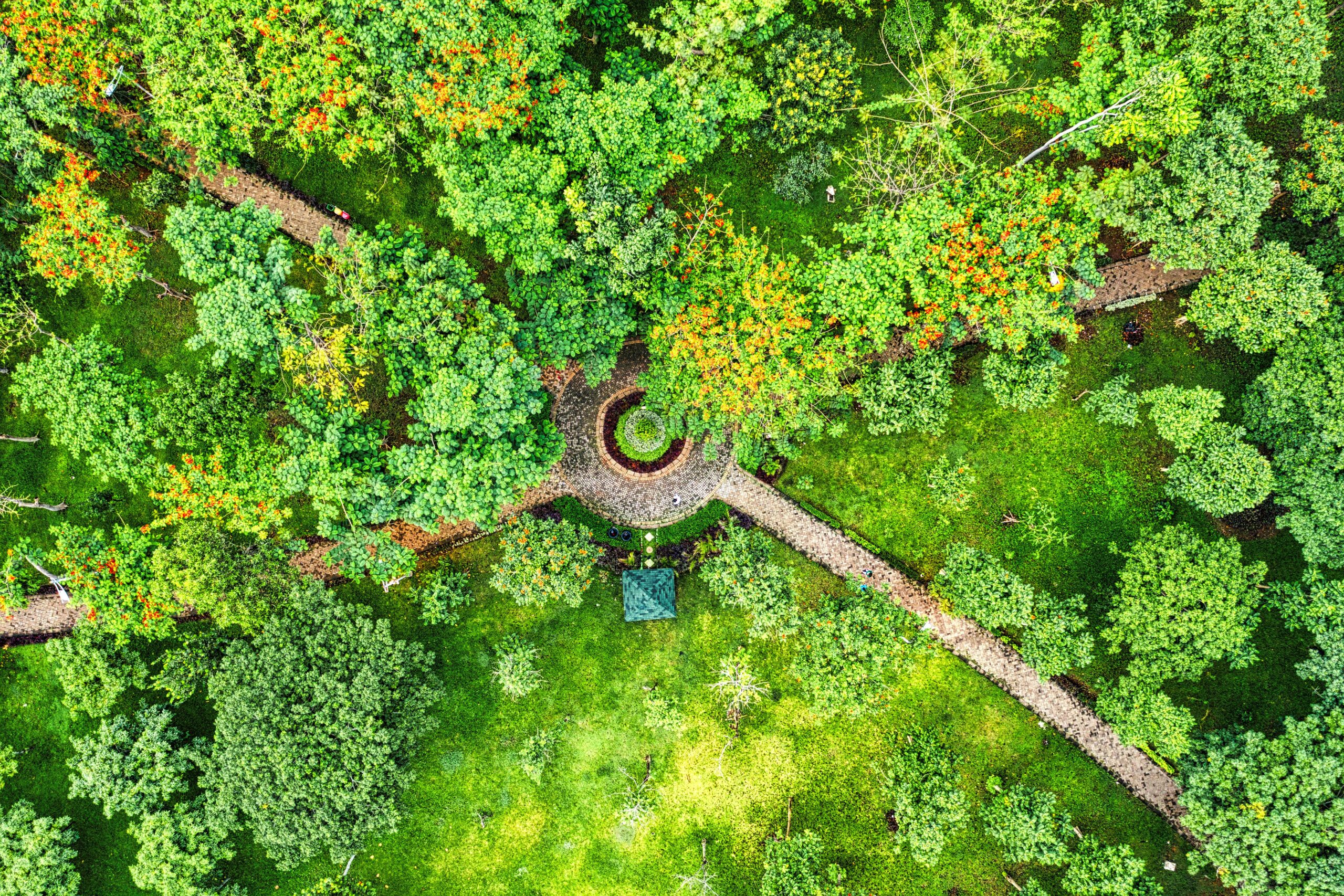
Precision in aerial surveys depends on mastering two critical factors: flight altitude and image overlap, which directly influence Ground Sample Distance and data quality.

🎯 Understanding the Foundation: GSD and Its Impact on Survey Accuracy
Ground Sample Distance (GSD) represents the real-world distance between two consecutive pixel centers in your aerial imagery. This fundamental measurement determines the level of detail your drone survey can capture and ultimately defines whether your data meets survey-grade requirements. A lower GSD value means higher resolution and greater detail, while a higher GSD produces less detailed imagery.
For professionals conducting aerial surveys, understanding GSD isn’t optional—it’s the cornerstone of project planning. The relationship between flight altitude, camera specifications, and GSD creates a delicate balance that surveyors must optimize for each unique project. When you fly higher, your GSD increases, capturing less detail but covering more ground per image. Conversely, flying lower decreases GSD, revealing finer details but requiring more images to cover the same area.
Survey-grade outputs typically demand GSD values ranging from 0.5 cm to 5 cm per pixel, depending on the project requirements. Topographic surveys might accept 2-3 cm GSD, while detailed infrastructure inspections or cadastral mapping often require sub-centimeter precision. This specification directly influences flight planning, data storage requirements, and processing time.
📐 Calculating Optimal Flight Altitude for Your Target GSD
Determining the correct flight altitude requires understanding the mathematical relationship between your camera sensor, focal length, and desired GSD. The formula connects these variables in a straightforward equation that every survey professional should master.
The basic GSD calculation follows this principle: GSD (cm) = (Flight Height × Sensor Width) / (Focal Length × Image Width). This formula allows you to work backwards from your required GSD to determine the optimal flight altitude for your specific equipment. Different camera systems and drone platforms will yield different results, making pre-flight calculations essential.
Consider a practical example: using a drone with a 1-inch sensor (13.2mm width), 4000 pixel image width, and 8.8mm focal length. To achieve a 2 cm GSD, you would calculate: Flight Height = (GSD × Focal Length × Image Width) / Sensor Width. This results in an optimal flight altitude of approximately 53 meters above ground level.
Sensor Size Matters More Than You Think
The physical sensor dimensions dramatically affect your survey capabilities. Larger sensors capture more light and detail, allowing higher flight altitudes while maintaining acceptable GSD values. Professional survey drones often feature 1-inch or larger sensors specifically for this reason.
Full-frame sensors provide significant advantages for large-area surveys, enabling efficient data collection at higher altitudes. However, they come with increased costs and equipment weight. Medium-format sensors represent the premium tier, offering exceptional image quality but requiring careful payload consideration and regulatory compliance.
🔄 Mastering Overlap Percentages: Front Overlap and Sidelap Explained
Image overlap serves as the second pillar of survey-grade data collection. Front overlap (also called forward overlap or endlap) refers to the percentage of overlap between consecutive images along the flight path. Sidelap describes the overlap between adjacent flight lines. Both parameters are crucial for successful photogrammetric processing.
Standard survey practices recommend minimum overlap values of 70-75% front overlap and 60-65% sidelap. However, these represent baseline figures rather than optimal settings. Complex terrain, dense vegetation, or challenging lighting conditions often require increased overlap to ensure sufficient tie points for accurate 3D reconstruction.
Higher overlap percentages provide multiple benefits: improved accuracy through redundant observations, better handling of occlusions, reduced data gaps, and enhanced reliability in challenging environments. The trade-off involves increased flight time, battery consumption, storage requirements, and processing duration. Professional surveyors must balance these factors based on project-specific requirements.
The Science Behind 80/70 Overlap Standards
Many experienced aerial surveyors adopt 80% front overlap and 70% sidelap as their baseline configuration. This approach provides substantial safety margins while maintaining reasonable efficiency. The additional overlap ensures that every ground point appears in multiple images from different angles, strengthening the photogrammetric solution.
Research demonstrates that higher overlap percentages significantly improve vertical accuracy—a critical factor for topographic surveys and volumetric calculations. The redundancy allows photogrammetry software to better resolve elevation values through enhanced triangulation. Projects requiring precise Digital Elevation Models (DEMs) or Digital Surface Models (DSMs) particularly benefit from this approach.
⚙️ Configuring Flight Parameters in Mission Planning Software
Modern mission planning applications provide intuitive interfaces for configuring flight altitude and overlap parameters. These tools calculate flight patterns, image positions, and estimated mission duration based on your specifications. Understanding how to leverage these platforms efficiently separates professional surveyors from casual operators.
Most planning software requires you to input your target GSD or flight altitude, front overlap percentage, and sidelap percentage. The application then generates a flight grid with parallel flight lines, accounting for takeoff and landing positions, battery limitations, and regulatory altitude restrictions. Advanced platforms incorporate terrain following capabilities, maintaining consistent GSD over elevation changes.
Professional surveyors should verify that their mission planning software accurately reflects their specific camera and drone specifications. Generic profiles may introduce errors that compromise data quality. Custom camera configurations ensure precise calculations and reliable survey outputs.
Terrain Following: The Game-Changer for Undulating Landscapes
Terrain-following flight modes represent a critical advancement for survey-grade data collection over variable topography. Without this capability, flying at a fixed altitude over hilly terrain results in inconsistent GSD—tighter where terrain rises and looser where it drops. This variation can cause sections of your survey to fall outside acceptable tolerance ranges.
Implementing terrain following requires high-quality elevation data for the survey area. Many planning applications integrate Digital Elevation Model databases, while others allow users to import custom terrain data. The system adjusts drone altitude continuously during flight, maintaining consistent height above ground level throughout the mission.
📊 Real-World Examples: Matching Parameters to Project Types
Different survey applications demand distinct combinations of GSD and overlap settings. Understanding these relationships helps optimize your workflow and resource allocation for specific project categories.
| Project Type | Recommended GSD | Front Overlap | Sidelap | Special Considerations |
|---|---|---|---|---|
| Cadastral Mapping | 0.5-1.5 cm | 80-85% | 70-75% | Requires highest precision, survey-grade GNSS |
| Topographic Survey | 2-3 cm | 75-80% | 65-70% | Ground control points essential for vertical accuracy |
| Construction Monitoring | 1-2 cm | 75-80% | 65-70% | Consistent flight parameters for change detection |
| Agricultural Analysis | 3-5 cm | 70-75% | 60-65% | Multispectral considerations may reduce overlap needs |
| Infrastructure Inspection | 0.5-1 cm | 85-90% | 75-80% | Oblique imagery often required, increasing complexity |
These parameters serve as starting points rather than rigid rules. Site-specific factors including terrain complexity, vegetation density, atmospheric conditions, and accuracy requirements should inform your final configuration decisions.
🌤️ Environmental Factors That Influence Optimal Settings
Even perfectly calculated flight parameters can underperform if environmental conditions aren’t considered. Lighting, wind, and atmospheric clarity significantly affect image quality and overlap effectiveness.
Optimal lighting occurs during midday hours when sun angle is high, minimizing shadows that can obscure ground features and complicate photogrammetric processing. Overcast conditions provide surprisingly excellent results by eliminating harsh shadows and reducing contrast extremes. Early morning or late afternoon flights create long shadows that may interfere with accurate surface reconstruction.
Wind conditions affect both image quality and actual overlap achieved. Strong winds can cause the drone to drift between programmed waypoints, potentially reducing effective overlap below planned values. Camera stability systems compensate for minor movements, but excessive wind creates motion blur that degrades image sharpness regardless of GSD specifications.
Seasonal Considerations for Survey Planning
Vegetation presents varying challenges across seasons. Deciduous forests surveyed during leaf-off conditions allow better ground penetration, producing more accurate terrain models. Agricultural surveys benefit from specific growth stage timing, while winter snow cover can either simplify or complicate surveys depending on project objectives.
Atmospheric haze reduces image contrast and clarity, particularly problematic for high-altitude surveys over large areas. Temperature inversions and humidity levels affect visibility and should factor into survey scheduling. Professional surveyors monitor weather forecasts and atmospheric conditions, postponing flights when conditions threaten data quality.
💾 Data Management Implications of Your Parameter Choices
The combination of flight altitude and overlap settings directly determines the number of images captured, which cascades into storage, processing, and deliverable considerations. A survey with 2 cm GSD and 75/65 overlap might generate 500 images, while the same area at 1 cm GSD with 85/75 overlap could produce over 2000 images.
Storage requirements scale dramatically with image count and resolution. Professional surveyors must budget for robust storage solutions including field backup systems, transit redundancy, and archive capabilities. A single large survey can easily generate hundreds of gigabytes of raw imagery before processing.
Processing time increases exponentially with image count and overlap percentage. More images mean more feature matching, more bundle adjustment iterations, and longer dense point cloud generation. High-performance computing resources become essential for maintaining reasonable turnaround times on survey-grade projects with demanding parameters.
🎓 Quality Control Checkpoints During Flight Operations
Real-time monitoring during survey flights allows immediate detection of issues that could compromise final outputs. Modern drone systems transmit telemetry enabling operators to verify that actual flight parameters match planned specifications.
Monitor altitude maintenance throughout the mission, particularly over terrain with elevation changes. Verify that the camera triggers at expected intervals, confirming proper image capture sequence. Watch for excessive drone movement or instability suggesting wind conditions that may affect image quality. Check battery levels against remaining mission duration to prevent incomplete coverage.
Post-flight preliminary checks should occur before leaving the survey site. Quickly review image count against expected numbers, spot-check several images for sharpness and proper exposure, and verify GPS coordinates are recording correctly. These simple validations can prevent costly return trips for data recollection.
🔧 Troubleshooting Common GSD and Overlap Challenges
Even experienced surveyors encounter issues requiring parameter adjustments. Recognizing common problems and their solutions accelerates troubleshooting and improves survey efficiency.
- Insufficient overlap in processed model: Actual overlap may fall short due to wind drift, inaccurate camera specifications, or timing errors. Increase planned overlap by 5-10% as a buffer against these factors.
- Inconsistent GSD across survey area: This typically indicates terrain-following wasn’t enabled or terrain data was inaccurate. Verify elevation data sources and enable adaptive altitude control.
- Processing failures or gaps in reconstruction: Often caused by inadequate overlap in challenging areas like water bodies, uniform surfaces, or dense vegetation. Consider targeted reflights with higher overlap over problematic zones.
- Blurry images degrading effective GSD: Check shutter speed settings—too slow for current light conditions or drone speed. Adjust ISO, aperture, or flight speed to maintain sharp captures.
- Excessive data volume straining resources: Overly conservative parameters may be inefficient. Review whether your application truly requires maximum GSD and overlap, or if slightly relaxed settings would meet specifications while improving efficiency.
📈 Advanced Techniques: Adaptive Parameters and Multi-Altitude Surveys
Sophisticated survey projects may benefit from adaptive parameter strategies that vary GSD and overlap based on feature importance or terrain characteristics. This approach optimizes resource allocation while maintaining quality where it matters most.
Multi-altitude missions combine general coverage at efficient higher altitudes with detailed low-altitude passes over critical features. For example, a construction site survey might use 3 cm GSD for general context while capturing specific structures at 1 cm GSD. Careful mission planning ensures proper integration of datasets during processing.
Oblique imagery supplements nadir (straight-down) photography for comprehensive documentation of vertical surfaces like building facades, cliffs, or infrastructure. These supplementary passes typically use different overlap settings and flight patterns, requiring specialized planning but delivering significantly enhanced 3D model completeness.
🚀 Future-Proofing Your Survey Workflow
Technology advances continuously reshape aerial survey capabilities and best practices. Staying current with developments ensures your parameter optimization strategies remain effective and competitive.
Artificial intelligence and machine learning increasingly influence photogrammetric processing, potentially enabling high-quality results from lower overlap percentages through intelligent feature matching and hole-filling. However, survey-grade accuracy requirements will likely continue demanding traditional overlap standards for legally defensible results.
Sensor technology improvements consistently deliver higher resolution cameras in smaller packages, enabling better GSD at equivalent altitudes or maintaining GSD while improving efficiency through higher flight altitudes. Monitoring these developments helps you time equipment upgrades for maximum return on investment.
Regulatory environments evolve, potentially affecting altitude restrictions, beyond-visual-line-of-sight operations, and automated flight capabilities. Professional surveyors must maintain awareness of changing regulations that could impact parameter optimization strategies and operational procedures.
🎯 Building Your Personal Parameter Optimization Framework
Developing systematic approaches to parameter selection improves consistency and reliability across diverse projects. Create decision-making frameworks that account for project requirements, equipment capabilities, environmental factors, and efficiency considerations.
Document your parameter choices and outcomes for each project, building a reference database that informs future decisions. Track which combinations produced exceptional results and which required revision. Note environmental conditions, processing challenges, and client feedback to refine your optimization methodology.
Establish relationships with photogrammetry software providers, drone manufacturers, and fellow survey professionals. These networks provide valuable insights into emerging best practices, parameter recommendations for specific equipment configurations, and troubleshooting assistance for challenging scenarios.
Continuous education through professional development courses, industry conferences, and technical publications keeps your knowledge current. Aerial survey technology and methodology advance rapidly—maintaining expertise requires ongoing commitment to learning and adaptation.
Ultimately, optimizing flight altitude and overlap for survey-grade outputs represents both science and art. The mathematical relationships provide firm foundations, but experience, judgment, and attention to detail transform adequate surveys into exceptional results. By mastering GSD calculations, understanding overlap implications, and systematically refining your approach through practice and analysis, you position yourself to deliver consistently high-quality aerial survey data that meets the most demanding professional standards. Success in this field requires technical knowledge, careful planning, adaptive problem-solving, and relentless commitment to precision—qualities that distinguish true survey professionals in an increasingly competitive and technologically sophisticated industry.