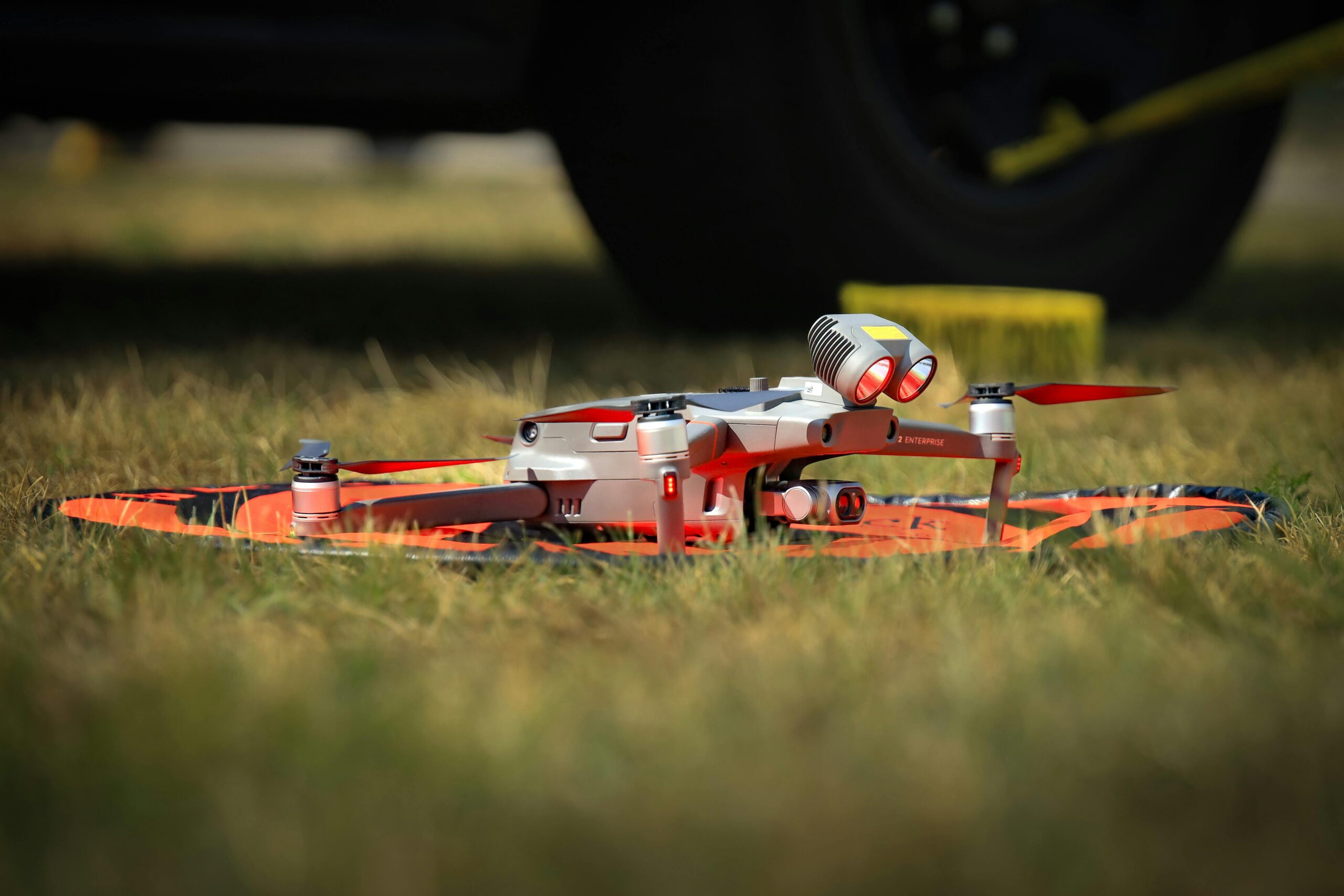
Sensor fusion represents a transformative approach in modern mapping technology, combining multiple data sources to achieve unprecedented accuracy and reliability in spatial information systems.

The integration of Inertial Measurement Units (IMU), Global Navigation Satellite Systems (GNSS), cameras, and Light Detection and Ranging (LiDAR) sensors has revolutionized how we capture, process, and utilize geospatial data. This convergence of technologies addresses individual sensor limitations while amplifying their collective strengths, creating robust mapping solutions that perform reliably across diverse environmental conditions and application scenarios.
As industries from autonomous vehicles to urban planning increasingly depend on high-precision mapping, understanding the nuances of sensor fusion becomes essential for professionals seeking to maximize data quality and operational efficiency. The strategic combination of these complementary technologies enables real-time positioning accuracy, detailed environmental reconstruction, and comprehensive spatial awareness that single-sensor systems simply cannot achieve.
🎯 Understanding the Foundation: Why Sensor Fusion Matters in Modern Mapping
Traditional mapping approaches relying on single sensor systems face inherent limitations that compromise accuracy and reliability. GNSS signals can be obstructed in urban canyons or dense forests, cameras struggle in low-light conditions, LiDAR generates massive data volumes requiring significant processing power, and IMUs experience drift over time without external reference corrections.
Sensor fusion addresses these challenges by leveraging the complementary nature of different sensor modalities. When one sensor underperforms due to environmental constraints, others compensate, maintaining continuous high-quality data acquisition. This redundancy doesn’t merely backup failing systems—it actively enhances overall performance through intelligent data integration algorithms.
The mathematical frameworks underlying sensor fusion, particularly Kalman filtering and its variants, enable real-time estimation of position, velocity, and orientation by optimally weighting sensor inputs based on their instantaneous reliability. This dynamic adjustment ensures that the fused output consistently outperforms any individual sensor, delivering accuracy levels critical for applications demanding centimeter-level precision.
📡 GNSS and IMU: The Dynamic Duo for Continuous Positioning
The integration of GNSS and IMU represents the most established sensor fusion pairing in navigation systems. GNSS provides absolute position references with global coverage, while IMUs deliver high-frequency motion measurements capturing rapid changes that GNSS updates might miss due to lower sampling rates.
IMU sensors measure specific force and angular velocity through accelerometers and gyroscopes, allowing dead reckoning between GNSS updates. This combination proves especially valuable during GNSS signal loss or degradation, where the IMU maintains positioning continuity through inertial navigation, albeit with accumulating drift that GNSS corrections subsequently resolve.
Tightly-Coupled vs. Loosely-Coupled Integration Architectures
Two primary architectural approaches govern GNSS-IMU fusion implementation. Loosely-coupled systems process GNSS and IMU data independently before combining their position and velocity outputs. This approach offers modularity and simplicity but may underutilize available information during challenging GNSS conditions.
Tightly-coupled integration operates at a deeper level, feeding raw GNSS pseudorange and Doppler measurements directly into the integration filter alongside IMU data. This architecture extracts maximum value from partial GNSS observations, maintaining accuracy even when fewer than four satellites are visible—conditions that would render standalone GNSS positioning impossible.
The choice between these architectures depends on application requirements, computational resources, and expected operational environments. High-precision mapping applications increasingly favor tightly-coupled approaches despite their greater complexity, as the accuracy improvements justify the additional implementation effort.
📸 Camera Integration: Adding Visual Context to Spatial Data
Cameras contribute rich texture and contextual information that geometric sensors like LiDAR cannot capture alone. Visual data enables feature recognition, semantic classification, and appearance-based localization that complement geometric positioning systems. The fusion of camera imagery with position sensors creates georeferenced visual datasets valuable for mapping, inspection, and documentation applications.
Visual-inertial odometry (VIO) exemplifies effective camera-IMU fusion, tracking visual features across image sequences while using IMU measurements to predict camera motion between frames. This combination achieves remarkable positioning accuracy in GPS-denied environments such as indoor spaces, tunnels, or dense urban areas where satellite visibility is compromised.
Photogrammetry Meets Sensor Fusion
Modern photogrammetric workflows leverage sensor fusion by incorporating GNSS-IMU positioning to constrain bundle adjustment computations. Direct georeferencing using precisely measured camera positions and orientations dramatically reduces or eliminates ground control point requirements, accelerating project workflows while maintaining accuracy standards.
Multi-camera systems synchronized with inertial and GNSS sensors enable comprehensive environmental capture from mobile platforms. These systems generate dense point clouds through structure-from-motion algorithms, with sensor fusion ensuring geometric consistency and absolute positioning accuracy throughout the captured dataset.
The computational challenge lies in real-time processing of high-resolution imagery alongside other sensor streams. Edge computing solutions and optimized algorithms increasingly enable onboard processing, reducing data transmission requirements and enabling immediate quality assessment during data acquisition missions.
🔦 LiDAR Integration: Precision Geometry Meets Multi-Sensor Intelligence
LiDAR technology provides direct three-dimensional measurements with millimeter-level precision, capturing detailed geometric information regardless of lighting conditions. When integrated with positioning sensors, LiDAR generates accurately georeferenced point clouds that form the foundation for high-precision mapping applications.
The combination of LiDAR with GNSS-IMU systems enables mobile mapping solutions that capture millions of 3D points per second while maintaining absolute positioning accuracy. This integration requires precise calibration of spatial relationships between sensors and temporal synchronization ensuring that position and orientation data correctly correspond to each LiDAR measurement.
Simultaneous Localization and Mapping (SLAM) Enhanced by Multi-Sensor Fusion
LiDAR-based SLAM algorithms construct maps while simultaneously determining sensor position within those maps—a chicken-and-egg problem elegantly solved through probabilistic estimation. Integrating additional sensors dramatically improves SLAM performance, with IMUs providing motion priors that constrain optimization problems and GNSS offering absolute position references that prevent drift accumulation.
Camera-LiDAR fusion in SLAM applications combines geometric precision with visual feature richness. LiDAR provides accurate depth measurements while cameras enable loop closure detection through appearance-based place recognition, ensuring long-term consistency in extensive mapping projects.
These multi-sensor SLAM systems power autonomous vehicle navigation, indoor mapping robots, and handheld mapping devices, demonstrating the practical value of comprehensive sensor fusion strategies across diverse application domains.
⚙️ Implementation Strategies for Optimal Sensor Fusion Performance
Successful sensor fusion implementation requires careful attention to calibration, synchronization, and data processing architectures. Spatial calibration determines precise geometric relationships between sensors—lever arms between GNSS antennas and IMU centers, boresight angles between cameras and inertial sensors, and coordinate transformations for LiDAR scanners.
Temporal synchronization ensures that measurements from different sensors are correctly associated despite varying sampling rates and latencies. Hardware timestamping and precise time distribution systems become essential in high-accuracy applications where microsecond-level timing errors can introduce noticeable positioning discrepancies.
Data Processing Workflows and Filter Design
Extended Kalman Filters (EKF) remain the workhorse of real-time sensor fusion, linearizing nonlinear sensor models to enable computationally efficient state estimation. More sophisticated approaches like Unscented Kalman Filters or particle filters offer improved performance with nonlinear systems at increased computational cost.
Graph-based optimization methods provide alternatives to filtering approaches, particularly for post-processing applications where batch optimization can leverage all available measurements simultaneously. Factor graph frameworks offer flexible architectures accommodating diverse sensor types and measurement models within unified optimization problems.
The selection between real-time filtering and post-processing optimization depends on application requirements. Autonomous systems demand real-time solutions despite potential accuracy compromises, while mapping projects often prioritize maximum accuracy achievable through computationally intensive batch processing.
🌐 Application-Specific Integration Strategies Across Industries
Different industries prioritize distinct aspects of sensor fusion based on operational requirements and environmental constraints. Understanding these application-specific needs guides appropriate technology selection and integration strategy design.
Autonomous Vehicles: Safety-Critical Real-Time Fusion
Autonomous vehicle navigation demands redundant, fault-tolerant sensor fusion systems operating under strict real-time constraints. Multiple LiDAR units, radar sensors, cameras, high-grade IMUs, and GNSS receivers provide overlapping coverage ensuring safe operation even with partial sensor failures.
The fusion architecture must rapidly detect sensor anomalies, assess data quality in real-time, and dynamically adjust sensor weighting to maintain safe operation. Functional safety standards like ISO 26262 impose rigorous validation requirements ensuring system reliability under all conceivable operating conditions.
Surveying and Mapping: Maximizing Accuracy and Productivity
Professional mapping applications prioritize absolute accuracy and comprehensive data capture over real-time processing. Mobile mapping systems integrate survey-grade GNSS receivers, tactical-grade IMUs, high-resolution cameras, and precise LiDAR scanners to achieve centimeter-level positioning accuracy.
Post-processing workflows apply sophisticated corrections including GNSS precise point positioning, IMU error modeling, and multi-sensor bundle adjustment to extract maximum accuracy from collected data. Quality control procedures verify accuracy through checkpoint comparisons and internal consistency checks across overlapping data acquisitions.
Robotics and Drones: Balancing Performance with Size and Power Constraints
Robotic platforms and unmanned aerial vehicles operate under strict size, weight, and power constraints requiring efficient sensor fusion solutions. Consumer-grade MEMS IMUs, compact GNSS receivers, lightweight cameras, and miniature LiDAR sensors provide sufficient performance for many applications while meeting platform limitations.
These systems increasingly leverage visual-inertial odometry for GPS-denied operation, with LiDAR integration enhancing obstacle avoidance and mapping capabilities. Onboard processing requirements drive adoption of specialized hardware accelerators and optimized algorithms enabling real-time performance within limited computational budgets.
🚀 Emerging Trends and Future Directions in Sensor Fusion Technology
Artificial intelligence and machine learning are transforming sensor fusion approaches, with deep learning models learning optimal integration strategies directly from data rather than relying on hand-crafted algorithms. Neural networks can learn complex sensor error patterns, adaptive weighting strategies, and robust outlier rejection mechanisms that traditional model-based approaches struggle to capture.
End-to-end learning systems process raw sensor inputs directly, potentially bypassing traditional processing pipelines and extracting information humans might overlook. While these approaches show promise, they require extensive training data and face challenges with interpretability and safety validation in critical applications.
5G and Beyond: Connectivity as a Sensor Modality
Next-generation wireless networks offer positioning capabilities that complement traditional sensors. 5G systems provide ranging measurements and angle-of-arrival information enabling indoor positioning where GNSS signals cannot penetrate. Integrating cellular positioning with conventional sensors creates seamless indoor-outdoor positioning systems.
Vehicle-to-everything (V2X) communication enables collaborative sensing where vehicles share sensor data and positioning information. This collective perception approach dramatically extends effective sensor range and provides redundant observations improving overall system robustness.
Quantum Sensors: The Next Frontier
Quantum inertial sensors promise revolutionary improvements in IMU performance, with stability orders of magnitude better than conventional systems. Cold atom interferometers and quantum gyroscopes may eventually eliminate inertial drift, reducing dependence on external position references and enabling extended GPS-denied operation.
While currently confined to laboratory environments, ongoing miniaturization efforts may eventually bring quantum sensors to field-deployable systems, fundamentally changing sensor fusion architectures when drift-free inertial measurements become available.
💡 Practical Considerations for Implementing Multi-Sensor Systems
Organizations implementing sensor fusion systems must address practical challenges beyond theoretical algorithm design. Sensor selection involves balancing performance requirements against budget constraints, with high-end components sometimes delivering marginal improvements over mid-range alternatives depending on application specifics.
Calibration procedures require specialized facilities and expertise, with initial calibration typically performed in controlled laboratory conditions. Field calibration techniques enable periodic verification and adjustment, but cannot replace comprehensive laboratory characterization for high-accuracy applications.
Data management strategies become critical when dealing with multi-sensor systems generating terabytes of data per day. Efficient storage formats, compression algorithms, and data lifecycle management policies ensure that valuable sensor data remains accessible for analysis and reprocessing as algorithms improve.
🔧 Overcoming Common Integration Challenges
Time synchronization issues frequently plague multi-sensor implementations, with even small timing errors degrading fusion performance. Hardware solutions using shared clock distributions or precision time protocols provide microsecond-level synchronization, while software approaches estimate and compensate for time offsets through careful calibration procedures.
Sensor calibration maintenance requires ongoing attention as mounting configurations shift due to vibration or thermal cycling. Regular validation against ground truth references and internal consistency checks identify calibration degradation before accuracy suffers unacceptably.
Environmental factors affect different sensors distinctly—temperature variations influence IMU biases, multipath errors degrade GNSS accuracy in reflective environments, and atmospheric conditions impact LiDAR range performance. Robust fusion algorithms must recognize and appropriately weight sensors based on current operating conditions rather than applying fixed integration strategies.
📊 Measuring and Validating Sensor Fusion System Performance
Rigorous performance validation ensures that sensor fusion systems meet application requirements. Reference trajectory systems using total stations or optical tracking provide ground truth for accuracy assessment under controlled conditions, while differential GNSS baselines enable field validation.
Statistical analysis of positioning errors characterizes system performance across operating conditions, identifying scenarios where accuracy degrades and guiding algorithm refinements. Consistency metrics assess internal agreement between redundant measurements, detecting sensor malfunctions or calibration errors.
Continuous monitoring during operational deployment tracks long-term performance trends, identifying gradual degradation requiring maintenance intervention. Automated quality control algorithms flag anomalous results, preventing flawed data from contaminating downstream applications.

🌟 Building Expertise and Moving Forward with Sensor Fusion
The complexity of multi-sensor fusion systems demands interdisciplinary expertise spanning sensor physics, signal processing, estimation theory, and software engineering. Organizations developing these capabilities benefit from structured training programs, collaboration with research institutions, and participation in professional communities focused on positioning and navigation technologies.
Open-source software frameworks provide accessible entry points for teams beginning sensor fusion development, with established codebases offering reference implementations of core algorithms. Commercial solutions provide turnkey systems for organizations prioritizing rapid deployment over custom development, though understanding underlying principles remains valuable even when using packaged solutions.
The field continues evolving rapidly, with new sensor technologies, improved algorithms, and novel application domains constantly emerging. Staying current requires ongoing engagement with technical literature, conference proceedings, and industry developments shaping the future of integrated sensing systems.
Sensor fusion represents not merely a technical capability but a fundamental approach to understanding our physical world through complementary observations. As sensors become more capable, algorithms more sophisticated, and computational resources more abundant, the accuracy and reliability of fused multi-sensor systems will continue improving, enabling applications once considered impossible and solving challenges that single-sensor approaches cannot address effectively.