Semantic mapping technology is revolutionizing how we interpret aerial imagery, transforming raw satellite and drone data into actionable intelligence with unprecedented accuracy.

🌍 The Revolution in Spatial Understanding Through Semantic Mapping
The world from above tells stories that ground-level observation simply cannot capture. When we combine high-resolution aerial imagery with semantic mapping technology, we unlock a treasure trove of geographical intelligence that’s transforming industries from urban planning to environmental conservation. This powerful synergy enables machines to not just see, but truly understand what they’re looking at—distinguishing between roads and rivers, buildings and trees, changes and constants.
Semantic mapping applies deep learning algorithms to aerial imagery, automatically classifying every pixel into meaningful categories. Unlike traditional image processing that merely identifies colors and patterns, semantic segmentation assigns contextual meaning to visual data. The result? Maps that don’t just show what’s there, but explain what everything is and how it relates to its surroundings.
🏗️ How Semantic Mapping Decodes the Built Environment
Buildings represent one of the most critical elements in semantic mapping applications. Advanced algorithms can now identify structures with remarkable precision, distinguishing between residential homes, commercial buildings, industrial facilities, and even temporary constructions. This capability extends beyond simple detection—modern systems can estimate building heights, footprint areas, roof materials, and structural conditions.
The technology works by training neural networks on millions of labeled images. These networks learn to recognize architectural features, shadows, textures, and spatial relationships that indicate building presence. Edge detection algorithms identify boundaries, while contextual analysis confirms classifications by examining surrounding features. A rectangular structure near other buildings with visible parking areas is more likely classified as commercial rather than residential.
Urban planners leverage this capability to maintain accurate building inventories without costly ground surveys. Insurance companies assess property risks from aerial views. Emergency responders identify structures in disaster zones where ground access is limited or dangerous. The applications multiply as the technology becomes more accessible and accurate.
🛣️ Mapping the Arteries of Transportation Networks
Road networks form the circulatory system of modern civilization, and semantic mapping excels at identifying these critical pathways. Advanced algorithms distinguish between highways, primary roads, secondary streets, unpaved paths, and even temporary access routes. The technology recognizes road markings, lane configurations, intersection types, and traffic patterns from aerial perspectives.
What makes road detection particularly challenging is the variety of contexts roads appear in. A highway cutting through dense forest looks vastly different from urban streets surrounded by buildings or rural dirt roads through agricultural land. Semantic mapping addresses this through multi-scale analysis, examining features at various resolutions simultaneously to maintain accuracy across diverse environments.
Transportation departments use this technology to monitor road conditions, plan maintenance schedules, and optimize traffic flow. Autonomous vehicle companies rely on semantically mapped roads to build high-definition maps for navigation systems. Logistics companies optimize delivery routes based on real-time road network analysis derived from recent aerial imagery.
🌳 Vegetation Analysis: From Pixels to Ecosystems
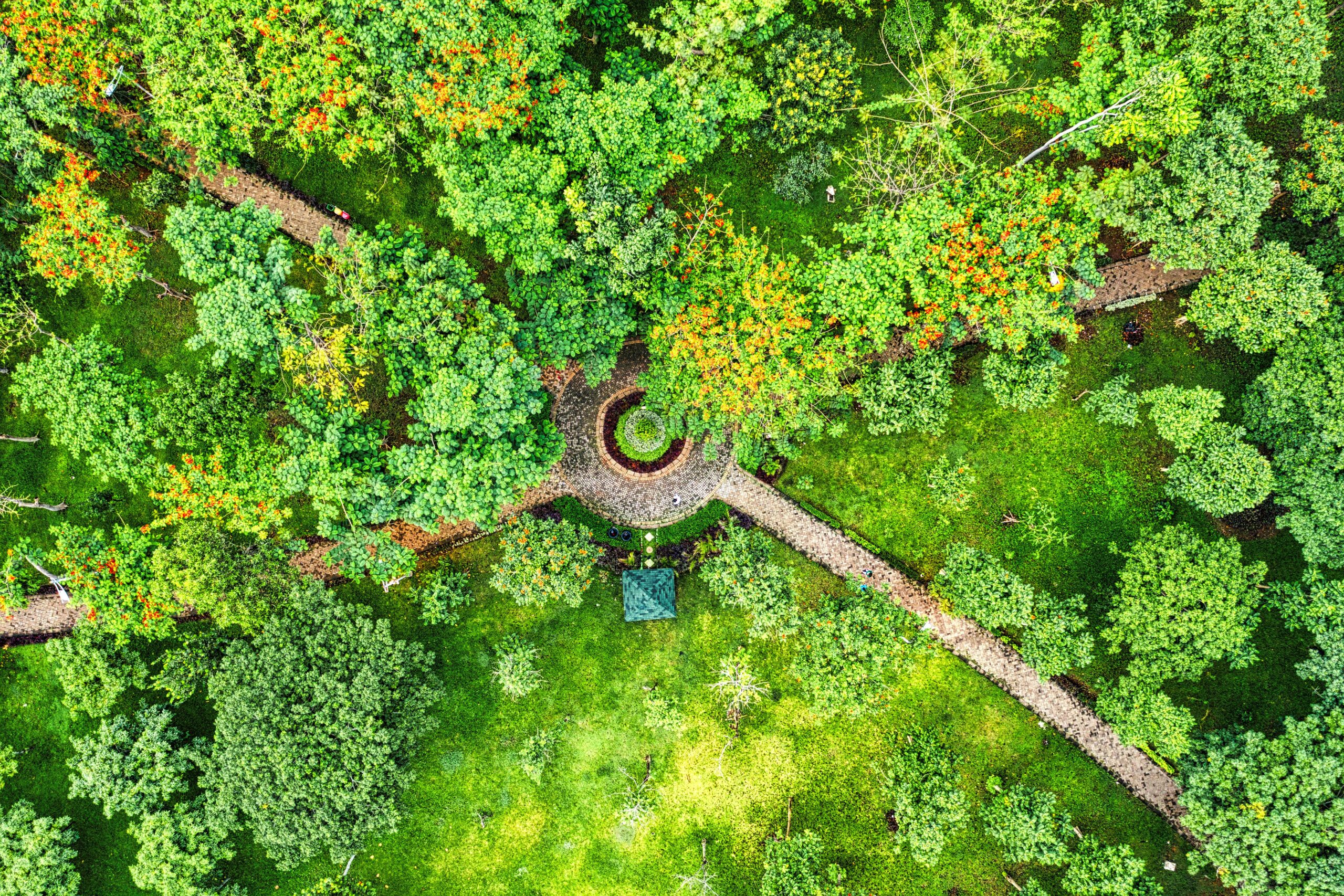
Vegetation mapping represents perhaps the most ecologically significant application of semantic aerial analysis. Modern algorithms distinguish between forest types, agricultural crops, grasslands, wetlands, and urban green spaces. They can identify individual tree species in some cases, assess canopy health, estimate biomass, and track seasonal changes in vegetation cover.
The process relies heavily on spectral analysis. Different vegetation types reflect light differently across various wavelengths. By analyzing multispectral or hyperspectral imagery, semantic mapping systems can differentiate between crops at different growth stages, identify stressed vegetation before visible symptoms appear, and distinguish native species from invasive ones.
Environmental agencies monitor deforestation and reforestation efforts through automated vegetation analysis. Agricultural businesses optimize irrigation and fertilization based on crop health maps. Urban forestry departments inventory street trees and plan green infrastructure improvements. Conservation organizations track habitat changes and biodiversity indicators through vegetation mapping over time.
📊 Detection Accuracy: The Metrics That Matter
Accuracy measurements in semantic mapping typically focus on several key metrics. Intersection over Union (IoU) measures how well predicted boundaries match actual features. Precision indicates the percentage of identified features that are correct, while recall measures the percentage of actual features successfully identified. F1 scores combine precision and recall into a single performance indicator.
Modern semantic mapping systems achieve impressive accuracy levels across different feature types:
| Feature Type | Typical Accuracy | Challenging Conditions |
|---|---|---|
| Buildings | 92-97% | Dense urban areas, shadows |
| Roads | 88-95% | Tree cover, poor marking |
| Vegetation | 85-93% | Mixed species, seasonal variation |
| Water Bodies | 94-98% | Shallow water, reflections |
| Bare Ground | 87-92% | Construction sites, mixed surfaces |
These accuracy levels represent significant improvements over manual interpretation methods, which are time-consuming, subjective, and prone to human error. Automated semantic mapping processes vast areas consistently, applying the same criteria uniformly across entire datasets.
🔄 Change Detection: Watching Our World Transform
Perhaps the most powerful application of semantic mapping lies in change detection—comparing aerial imagery from different time periods to identify transformations in the landscape. This temporal analysis reveals urban expansion, deforestation, agricultural changes, infrastructure development, natural disaster impacts, and environmental degradation.
Change detection algorithms work by comparing semantically segmented maps from different dates. The system identifies areas where land cover classifications have shifted—forest becoming agricultural land, agricultural land becoming urban development, vegetated areas becoming bare ground. Advanced systems can quantify change rates, predict future trends, and flag unexpected alterations that might indicate illegal activity or environmental concerns.
The applications span numerous sectors. City planners track urban sprawl and assess whether development follows zoning regulations. Environmental agencies monitor protected areas for unauthorized encroachment. Agricultural ministries track crop rotation patterns and land use efficiency. Disaster response teams assess damage extent and recovery progress after floods, fires, or storms.
🤖 The Technology Behind the Magic: Neural Networks and Deep Learning
The semantic mapping revolution rests on convolutional neural networks (CNNs) specifically designed for image segmentation tasks. Architectures like U-Net, DeepLab, and SegNet have become industry standards, each offering unique advantages for different applications and computational constraints.
These networks operate through encoder-decoder structures. The encoder progressively reduces spatial resolution while extracting increasingly abstract features—moving from edges and textures to object parts and entire features. The decoder reconstructs spatial resolution, producing pixel-level classifications that precisely outline detected features.
Training these networks requires massive labeled datasets where humans have manually classified features in thousands of aerial images. Transfer learning accelerates this process, allowing models trained on general imagery to be fine-tuned for specific semantic mapping tasks with smaller specialized datasets. Data augmentation techniques—rotating, flipping, adjusting brightness and contrast—artificially expand training sets and improve model robustness.
🛰️ Data Sources: From Satellites to Drones
Semantic mapping draws on diverse aerial imagery sources, each offering distinct advantages:
- Satellite Imagery: Provides consistent global coverage with regular revisit times. Commercial satellites like those operated by Maxar, Planet Labs, and Airbus offer resolutions down to 30cm per pixel. Government satellites like Landsat and Sentinel provide free, coarser resolution imagery ideal for large-scale environmental monitoring.
- Aerial Photography: Aircraft-mounted cameras capture extremely high-resolution imagery (5-10cm per pixel) for detailed urban mapping and infrastructure inspection. Flight campaigns can be scheduled flexibly but cover smaller areas than satellites.
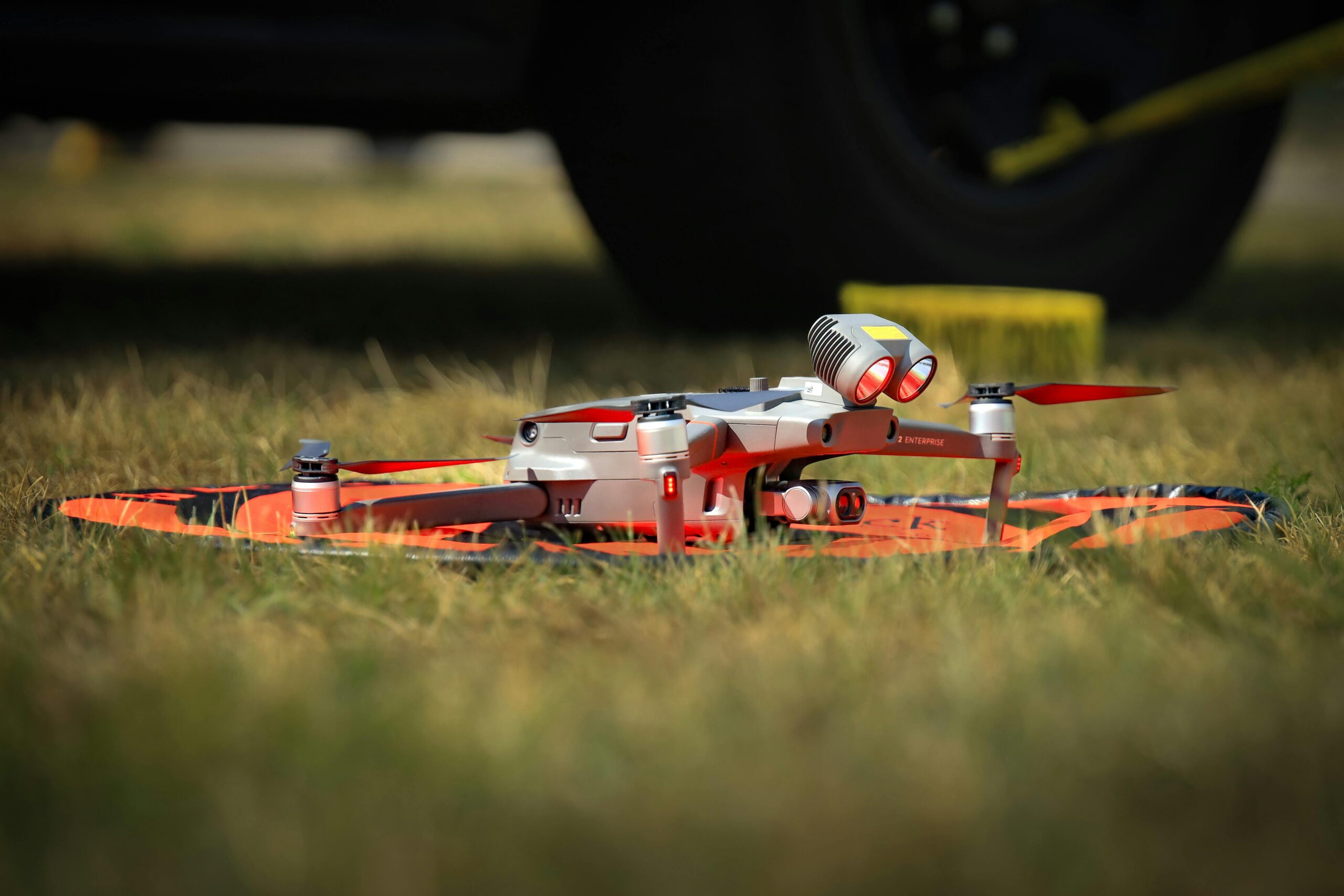
- Drone Imagery: UAVs deliver ultra-high resolution (1-3cm per pixel) for site-specific applications. Drones offer unmatched flexibility for timing and viewing angles but are limited to relatively small areas and face regulatory constraints.
- LiDAR Integration: Light Detection and Ranging adds elevation data that dramatically improves classification accuracy. The combination of optical imagery and 3D structure allows precise building height measurement, vegetation canopy analysis, and terrain modeling.
💼 Real-World Applications Transforming Industries
The practical applications of semantic mapping continue expanding as the technology matures and becomes more accessible. Urban planning departments use automated building detection to maintain property databases and assess infrastructure needs. By comparing current conditions with historical imagery, planners identify growth patterns and anticipate future demands for utilities, transportation, and services.
The insurance sector increasingly relies on semantic mapping for risk assessment and claims processing. Automated building inventories inform underwriting decisions. Post-disaster imagery analysis accelerates claims settlement by quickly identifying damaged structures. Some insurers offer premium discounts for properties with favorable characteristics identified through aerial analysis—like adequate defensible space around buildings in wildfire-prone areas.
Environmental conservation benefits tremendously from large-scale automated monitoring. Forest change detection identifies illegal logging operations in protected areas. Wetland mapping tracks habitat loss and restoration success. Vegetation health monitoring provides early warning of drought stress, disease outbreaks, or pest infestations affecting forests and crops.
Infrastructure management for utilities, telecommunications, and transportation networks leverages semantic mapping for asset inventory and condition assessment. Power companies identify vegetation encroachment threatening transmission lines. Road authorities prioritize pavement repairs based on surface condition visible in aerial imagery. Telecommunications providers plan network expansion using building and population density maps derived from semantic analysis.
🎯 Precision Agriculture: Optimizing Every Square Meter
Agricultural applications of semantic mapping have exploded in recent years, driven by the need for resource efficiency and sustainable intensification. Farmers use crop health maps derived from multispectral imagery to apply fertilizers and pesticides only where needed—reducing costs and environmental impact while maintaining yields.
Within-field variability mapping identifies zones with different soil properties, drainage characteristics, or productivity levels. This information guides variable rate application of inputs, ensuring each area receives optimal treatment. Irrigation management systems use vegetation indices calculated from aerial imagery to schedule watering precisely, conserving water while preventing crop stress.
Yield prediction models incorporate semantic mapping data on crop vigor throughout the growing season. These predictions help farmers plan harvest logistics and negotiate forward contracts. Insurance companies use the same data to assess crop conditions and settle weather-related claims objectively.
⚡ Overcoming Challenges: Weather, Shadows, and Complexity
Despite impressive capabilities, semantic mapping faces persistent challenges. Cloud cover obscures satellite imagery in many regions for extended periods, creating data gaps. Shadow effects in urban canyons and beneath tree canopies can confuse classification algorithms. Seasonal variations in vegetation appearance require models trained on imagery from multiple times of year.
Urban environments present particular complexity with mixed-use buildings, varied roof materials, and dense feature packing. Distinguishing between rooftop solar panels and skylights, green roofs and surrounding vegetation, or roads and large paved areas requires sophisticated contextual analysis.
Computational demands also constrain widespread adoption. Processing high-resolution imagery for large areas requires substantial computing power. Cloud-based processing services have democratized access, but costs scale with area and resolution. Edge computing solutions that process data on drones or aircraft before transmission are emerging to address bandwidth limitations.
🚀 The Future: Integration, Automation, and Real-Time Analysis
The trajectory of semantic mapping technology points toward increasingly sophisticated, automated, and integrated systems. Real-time processing of drone and aircraft imagery will enable live situational awareness for emergency response, traffic management, and security applications. Imagine fire commanders viewing automatically mapped building locations and vegetation fuel loads as they develop incident action plans, or traffic management centers seeing current road conditions updated continuously from aerial platforms.
Integration with other data sources will enhance semantic mapping capabilities. Combining aerial imagery analysis with social media data, mobile phone signals, IoT sensors, and traditional GIS databases creates comprehensive digital twins of cities and regions. These digital representations update automatically as new imagery becomes available, maintaining current awareness of physical conditions.
Artificial intelligence advancement will bring improved accuracy, especially for challenging conditions and rare feature types. Few-shot learning techniques will allow models to recognize new feature classes from just a handful of examples. Unsupervised and self-supervised learning approaches will reduce dependence on expensive manual labeling, enabling models to learn from raw imagery patterns.
🌐 Democratizing Access Through Open Platforms and Tools
The semantic mapping revolution extends beyond specialized corporations and government agencies. Open-source tools and platforms are democratizing access to these capabilities. Projects like TensorFlow, PyTorch, and QGIS provide free frameworks for developing and deploying semantic mapping applications. Pre-trained models available through platforms like Hugging Face allow smaller organizations to leverage state-of-the-art capabilities without extensive machine learning expertise.
Cloud computing platforms offer semantic mapping services with pay-as-you-go pricing, eliminating the need for expensive local infrastructure. Google Earth Engine, Amazon Web Services, and Microsoft Planetary Computer provide free or low-cost access to petabytes of satellite imagery and the computing power to analyze it at scale.
These developments enable non-profits, academic researchers, and community organizations to leverage semantic mapping for social good applications—from tracking informal settlements to monitoring reforestation projects to assessing disaster preparedness in vulnerable communities.
🎓 Building Expertise: Skills for the Semantic Mapping Era
As semantic mapping becomes mainstream, new career opportunities emerge for professionals combining geographic knowledge with data science skills. Remote sensing specialists increasingly need machine learning expertise to develop and deploy classification models. GIS analysts benefit from understanding neural network architectures and training procedures. Computer vision engineers working on semantic segmentation find valuable applications in geospatial contexts.
Educational institutions are responding with specialized programs bridging geography, computer science, and environmental science. Online courses through platforms like Coursera, edX, and Udacity provide accessible paths to acquiring semantic mapping skills. The combination of domain expertise and technical capability creates particularly valuable professional profiles as organizations seek to operationalize these technologies.

✨ Transforming Perspective: The Bigger Picture
Beyond specific applications and technical capabilities, semantic mapping represents a fundamental shift in how humanity monitors and manages our planet. For the first time, we possess tools to continuously observe and understand land cover changes at global scale with neighborhood-level detail. This capability arrives at a critical moment as climate change, urbanization, and resource pressures demand evidence-based decision making.
The transparency enabled by automated monitoring creates accountability for environmental commitments. Deforestation pledges can be independently verified. Protected area encroachment becomes visible to global observers. Urban growth patterns can be compared against sustainability targets. This observational capacity, powered by semantic mapping, may prove as significant as the satellite imagery itself—transforming data into understanding, and understanding into action.
As the technology continues maturing, accuracy improving, and costs declining, semantic mapping of aerial imagery will transition from specialized tool to fundamental infrastructure for understanding our changing world. The roads we build, the buildings we construct, the forests we preserve or destroy, and the changes we create across the landscape will all become part of a continuously updated, precisely mapped, semantically understood digital representation of Earth—revealing patterns, informing decisions, and ultimately shaping how we steward our shared home. 🌎