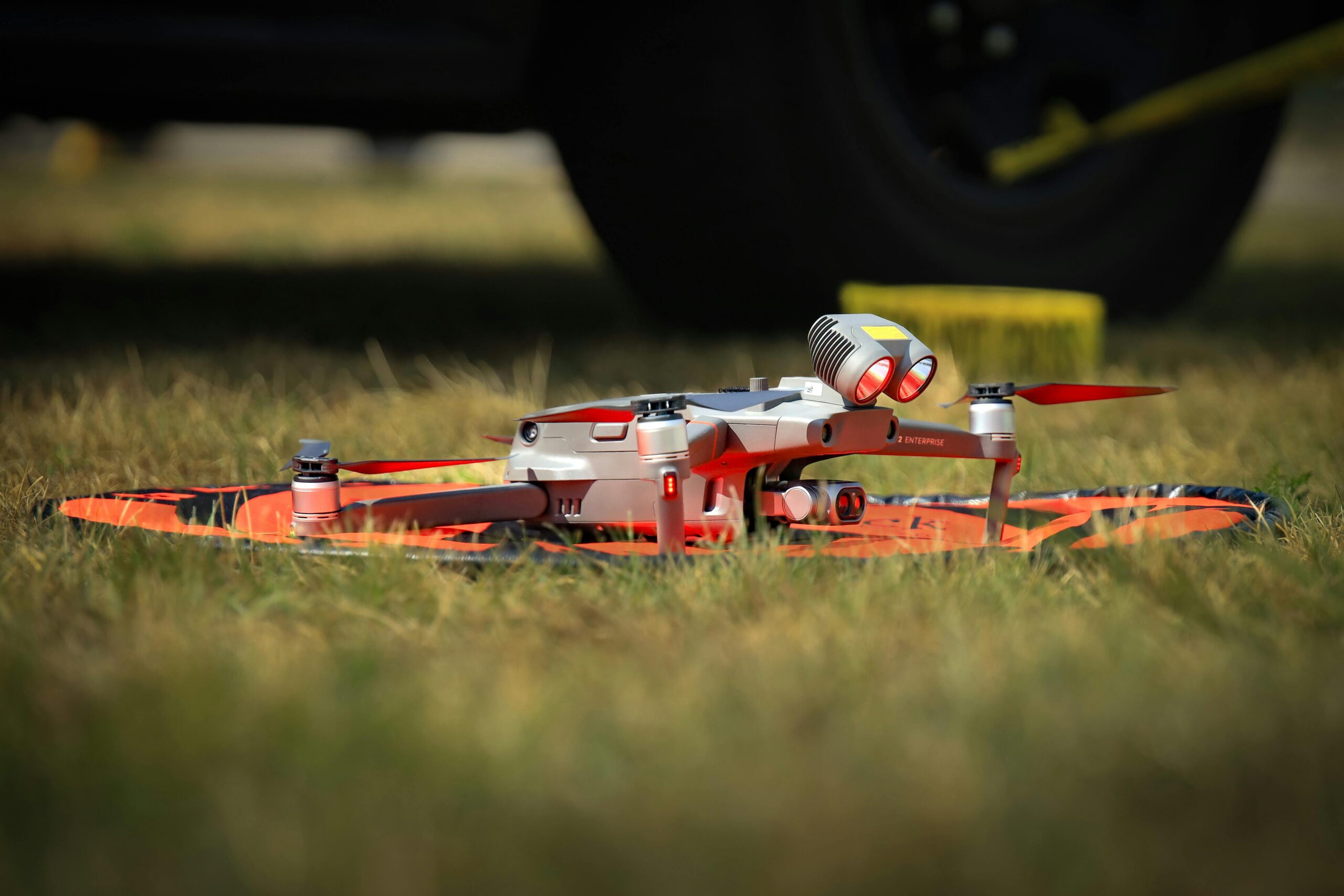
LiDAR mapping from UAVs has revolutionized precision surveying, enabling professionals to capture high-resolution topographic data with unprecedented efficiency and accuracy in challenging environments.

🚁 The Revolution of Airborne LiDAR Technology
The integration of Light Detection and Ranging (LiDAR) sensors with unmanned aerial vehicles has transformed how we approach aerial surveying. This powerful combination delivers centimeter-level accuracy while dramatically reducing the time and cost associated with traditional surveying methods. However, achieving this precision requires mastering three critical components: strip alignment, boresight calibration, and intensity normalization.
Modern UAV-LiDAR systems generate millions of point measurements per second, creating dense three-dimensional representations of terrain, vegetation, and infrastructure. Yet the raw data collected during flight requires sophisticated processing to achieve the accuracy standards demanded by industries ranging from civil engineering to environmental monitoring.
Understanding Strip Alignment in LiDAR Surveys
Strip alignment represents one of the most crucial steps in processing UAV-LiDAR data. When conducting aerial surveys, operators typically fly multiple overlapping flight lines, called strips, to ensure complete coverage of the target area. Each strip contains millions of points captured from slightly different perspectives and at different times.
Why Strip Misalignment Occurs
Several factors contribute to misalignment between adjacent flight strips. GPS positioning errors, even with RTK corrections, can introduce horizontal and vertical discrepancies. Inertial Measurement Unit (IMU) drift accumulates over time, causing progressive positioning errors. Atmospheric conditions affect GPS signal quality differently across the survey area, and dynamic flight conditions create variations in aircraft attitude that aren’t perfectly captured by onboard sensors.
These errors manifest as visible offsets when viewing overlapping strips, creating artificial ridges, valleys, or duplicate features that don’t exist in reality. Left uncorrected, these misalignments compromise measurement accuracy and create unusable datasets.
Advanced Strip Adjustment Techniques
Professional LiDAR processing software employs sophisticated algorithms to detect and correct strip misalignments. The process typically involves identifying corresponding features in overlapping areas, calculating transformation parameters for each strip, and applying corrections while maintaining internal strip consistency.
Modern adjustment workflows utilize several approaches:
- Surface-based matching: Compares ground surfaces between strips to calculate optimal alignment transformations
- Feature-based registration: Identifies common features like building corners or road edges to establish correspondence
- Iterative closest point (ICP) algorithms: Minimizes distances between point clouds through successive refinement
- Least-squares adjustment: Distributes corrections across the entire survey network to minimize overall error
🎯 Mastering Boresight Calibration
Boresight calibration addresses the angular relationship between your LiDAR sensor, IMU, and GPS antenna. Even microscopic misalignments in these mounting angles translate to significant positional errors in the final point cloud, particularly as distance from the sensor increases.
The Physics Behind Boresight Errors
Understanding boresight calibration requires recognizing that your UAV-LiDAR system consists of multiple sensors working in concert. The IMU measures aircraft orientation, the GPS determines position, and the LiDAR measures distances to ground targets. The system must know precisely how these sensors are oriented relative to each other.
Three angular parameters define this relationship: roll, pitch, and yaw offsets. A one-degree error in any of these angles can cause horizontal displacement of nearly two meters at a flight altitude of 100 meters. For precision surveys requiring centimeter-level accuracy, even fractions of a degree matter significantly.
Conducting Effective Boresight Calibration
Proper boresight calibration follows a systematic methodology. Select a calibration site with well-defined features like building roofs, painted parking lot lines, or purpose-built calibration targets. The area should be relatively flat with minimal vegetation and contain features with distinct edges visible from multiple directions.
Fly multiple strips over the calibration area at different headings—typically 0°, 90°, 180°, and 270°. This cross-pattern reveals directional biases caused by mounting angle errors. Process the data and examine overlapping areas for systematic offsets that vary with flight direction.
Calculate correction angles by measuring offsets in overlapping strips and solving for the rotation parameters that minimize disagreement. Modern processing software automates much of this calculation, but understanding the underlying principles ensures proper quality control.
Frequency and Documentation Requirements
Perform boresight calibration whenever you modify sensor mounting hardware, after any significant impact to the UAV, when GPS/IMU components are replaced, or at minimum every 30 flight hours. Temperature extremes can also affect mounting geometry, necessitating more frequent calibration in harsh environments.
Maintain detailed calibration records including date, location, flight parameters, calculated offsets, and residual errors. This documentation proves essential for quality assurance and helps identify trends suggesting hardware degradation or mounting instability.
📊 Harnessing Intensity Data for Enhanced Surveys
Beyond positional coordinates, LiDAR sensors record the intensity of returned laser pulses. This radiometric information provides valuable insights into surface properties, material composition, and feature classification. However, raw intensity values require normalization and calibration to achieve consistent, meaningful results.
Factors Affecting LiDAR Intensity
Multiple variables influence the intensity of returned laser energy. Range to target significantly affects intensity—signals weaken predictably with distance according to the radar equation. Incidence angle matters because oblique angles scatter more energy away from the sensor than perpendicular hits.
Surface properties including material composition, moisture content, roughness, and color all influence reflectivity at the laser wavelength, typically 905nm or 1550nm for commercial systems. Atmospheric conditions including humidity, dust, and precipitation attenuate the laser beam differently across the survey area.
Intensity Normalization Methods
Raw intensity values from different flight strips often show noticeable variations even over identical surfaces. Normalization corrects these variations to produce consistent radiometric data across the entire survey.
Range normalization compensates for signal weakening with distance using the laser range equation. This correction typically involves calculating intensity values to a standard reference distance, allowing meaningful comparison between measurements taken at different ranges.
Incidence angle correction accounts for the effect of beam angle on surface reflectance. Computing the angle between the laser beam and surface normal allows applying empirical or theoretical correction functions based on surface scattering models.
Atmospheric correction addresses signal attenuation through air. While challenging to implement precisely, simple approaches using measured visibility or humidity can improve consistency, particularly in variable weather conditions.
Practical Applications of Calibrated Intensity
Properly calibrated intensity data enhances numerous survey applications. Automated ground classification algorithms use intensity to distinguish roads, vegetation, water, and structures with greater reliability. Intensity combined with geometric features improves object recognition and feature extraction workflows.
Infrastructure inspection benefits from intensity analysis to identify material degradation, moisture infiltration, or surface damage. Power line surveys use intensity patterns to detect insulator damage or vegetation encroachment. Coastal and riverine surveys distinguish water levels and sediment characteristics through intensity variations.
🔧 Workflow Integration and Quality Control
Achieving precision in UAV-LiDAR surveys requires integrating strip alignment, boresight calibration, and intensity processing into a cohesive workflow with rigorous quality control at every stage.
Pre-Flight Planning Considerations
Successful surveys begin with thoughtful mission planning. Design flight lines with sufficient overlap—typically 30-50% sidelap ensures adequate tie between adjacent strips for reliable alignment. Consider wind conditions when planning flight direction to minimize drift and attitude variations.
Establish ground control points throughout the survey area using GNSS equipment with known accuracy. These checkpoints enable independent verification of final point cloud accuracy and provide reference for strip adjustment algorithms.
Processing Pipeline Best Practices
Structure your processing workflow to address errors systematically. Begin with trajectory processing to compute precise position and orientation throughout the flight using GPS/IMU data. Apply boresight corrections using previously determined calibration parameters for your specific sensor configuration.
Generate preliminary point clouds and perform strip alignment before further processing. This sequence ensures geometric corrections are applied consistently. After alignment, apply intensity normalization using appropriate correction factors for range, angle, and atmospheric effects.
Conduct thorough quality assessment at multiple stages. Examine trajectory quality metrics including position accuracy, attitude stability, and GPS/IMU solution status. Analyze strip alignment residuals in overlap areas—values should typically fall within 2-3 centimeters for high-precision surveys.
Validation Against Ground Truth
Compare final point clouds against surveyed ground control points to verify absolute accuracy. Calculate vertical and horizontal residuals for multiple checkpoints distributed throughout the survey area. Statistical analysis of these residuals reveals systematic biases requiring correction and quantifies overall survey precision.
Cross-check results against existing datasets when available. Overlap with previous surveys or photogrammetric models provides additional validation and helps identify temporal changes versus processing artifacts.
💡 Advanced Techniques for Challenging Environments
Certain survey conditions demand specialized approaches beyond standard processing workflows. Recognizing these scenarios and applying appropriate techniques distinguishes expert practitioners.
Surveys Over Featureless Terrain
Agricultural fields, deserts, or snow-covered landscapes lack distinct features for strip alignment algorithms. In these environments, rely more heavily on ground control points and careful trajectory processing. Consider flying additional cross-strips perpendicular to main survey lines to improve geometric strength.
Vegetated Areas and Canopy Penetration
Dense vegetation complicates strip alignment because surface definition varies between passes as the laser samples different leaves and branches. Focus alignment on detected ground points rather than full point clouds. Multi-return LiDAR systems provide better ground penetration, improving alignment reliability under canopy.
Corridor Mapping and Linear Features
Pipeline, power line, and road surveys present unique challenges with limited strip overlap and predominantly longitudinal features. Implement cross-ties—short perpendicular flights that span multiple parallel strips—to constrain alignment solutions. These cross-ties dramatically improve geometric strength of the adjustment network.
🎓 Building Expertise Through Practice
Mastering UAV-LiDAR surveying requires combining theoretical knowledge with practical experience. Each survey presents unique challenges that develop professional judgment and problem-solving skills.
Start with straightforward surveys over accessible sites with good feature definition before progressing to challenging environments. Document processing parameters and results to build a knowledge base for your specific sensor configuration. Participate in professional organizations and training programs to stay current with evolving best practices and emerging technologies.
Experiment with different processing software packages to understand their strengths and limitations. While commercial packages offer powerful automation, understanding manual processing techniques provides insight into algorithmic approaches and enables troubleshooting when automated workflows fail.
The Future of Precision Aerial LiDAR
Emerging technologies continue advancing UAV-LiDAR capabilities. Improved GPS positioning through multi-frequency receivers and augmentation services enhances trajectory accuracy, reducing reliance on extensive ground control. Advanced IMUs with better drift characteristics minimize attitude errors affecting boresight stability.
Machine learning algorithms are revolutionizing point cloud classification and feature extraction, leveraging intensity data alongside geometric information for more intelligent automation. Real-time processing capabilities allow quality assessment during flight, enabling operators to identify and correct issues before leaving the survey site.
Integration with other sensors including RGB cameras, multispectral imagers, and thermal cameras creates rich multimodal datasets. Fusion of these complementary data types enhances interpretation and expands application possibilities across industries.
Achieving Survey Excellence
Precision UAV-LiDAR surveying demands attention to detail throughout the entire workflow from mission planning through final deliverable production. Strip alignment corrects for GPS/IMU errors and flight dynamics effects. Boresight calibration ensures sensors work in perfect geometric harmony. Intensity normalization transforms raw radiometric measurements into consistent, meaningful surface property data.
These three pillars—when properly understood and implemented—unlock the full potential of airborne LiDAR technology. The result is survey-grade accuracy from a flexible, efficient UAV platform that can access areas impossible for traditional methods.
Success requires both technical competence and practical experience. Invest time in understanding the physics underlying each process. Practice systematic workflows with rigorous quality control. Document results and continuously refine your approach based on lessons learned from each project.
The surveying profession increasingly demands the precision and efficiency that UAV-LiDAR provides. Those who master these critical techniques position themselves at the forefront of geospatial technology, delivering exceptional value to clients across diverse industries from engineering and construction to environmental science and cultural heritage preservation.