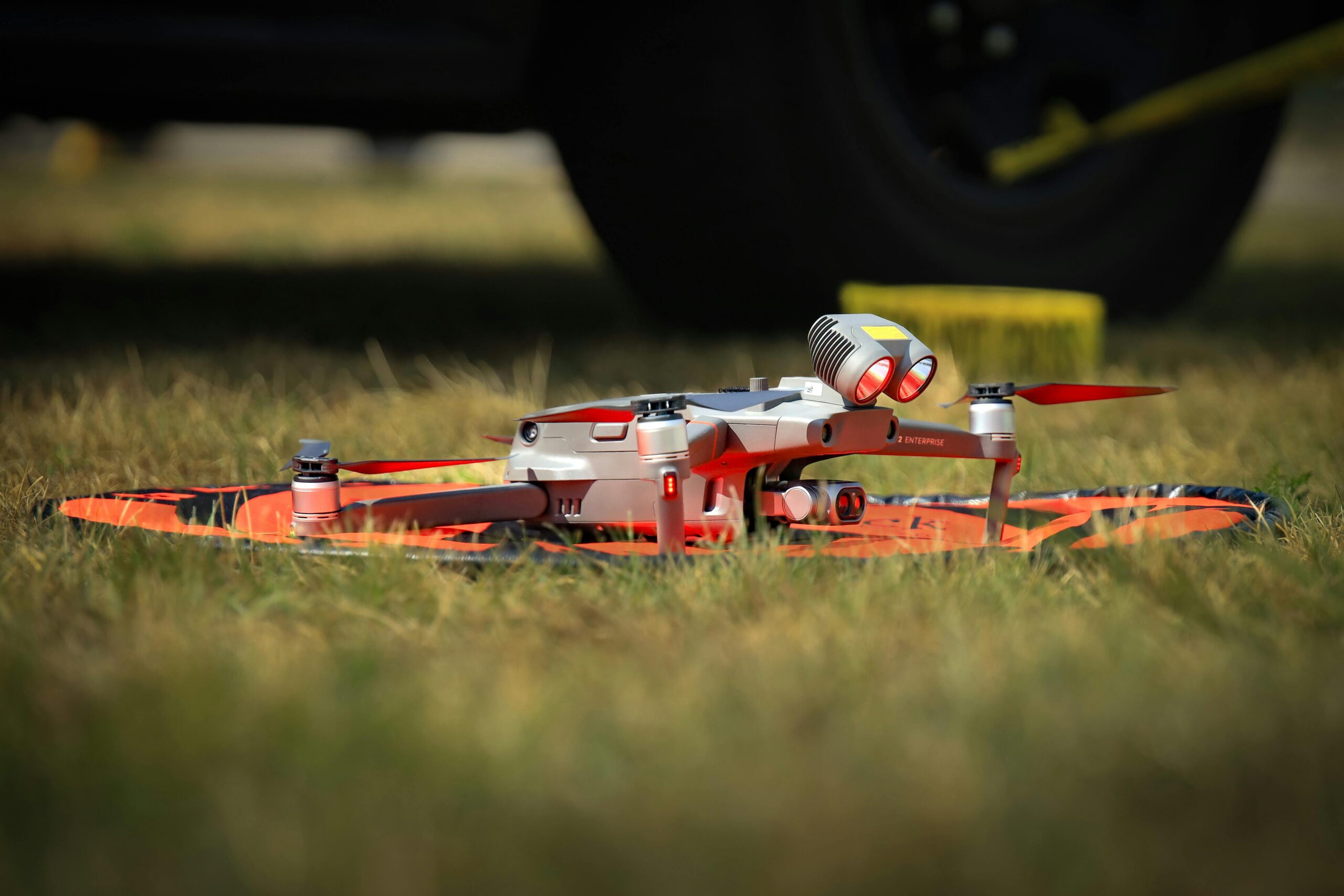
Mastering dynamic obstacle avoidance in cluttered environments transforms mapping from frustrating chaos into streamlined precision, enabling autonomous systems to navigate complex spaces with confidence.

🚀 The Critical Role of Dynamic Obstacle Avoidance in Modern Mapping
In today’s rapidly evolving technological landscape, the ability to navigate cluttered environments while simultaneously creating accurate maps has become indispensable. Whether you’re developing autonomous vehicles, deploying warehouse robots, or creating indoor mapping solutions, dynamic obstacle avoidance represents the cornerstone of successful implementation. The challenge isn’t merely avoiding static objects—it’s anticipating, tracking, and responding to moving obstacles while maintaining mapping accuracy and efficiency.
Traditional mapping systems often struggled in environments where objects moved unpredictably. A warehouse with forklifts crossing paths, shopping centers with pedestrian traffic, or manufacturing facilities with dynamic workflows all present scenarios where static obstacle detection falls dramatically short. The evolution from simple collision avoidance to sophisticated dynamic obstacle management has revolutionized how autonomous systems interact with their surroundings.
Modern navigation systems must process enormous amounts of sensor data in real-time, distinguishing between permanent fixtures, temporary obstacles, and moving entities. This computational challenge requires advanced algorithms that balance processing speed with decision-making accuracy, ensuring the system responds appropriately without compromising mapping quality or operational safety.
🎯 Understanding the Foundations of Obstacle Detection Technology
Effective obstacle avoidance begins with robust detection systems. Contemporary autonomous platforms typically integrate multiple sensor technologies, each offering unique advantages for different environmental conditions and obstacle types.
Sensor Integration for Comprehensive Environmental Awareness
LiDAR systems provide precise distance measurements by emitting laser pulses and calculating return times, creating detailed three-dimensional point clouds of the surrounding environment. These sensors excel at detecting objects regardless of lighting conditions, making them invaluable for 24/7 operation. High-resolution LiDAR can distinguish objects as small as a few centimeters from distances exceeding 100 meters, providing the spatial awareness necessary for safe navigation.
RGB-D cameras combine traditional visual imaging with depth perception, offering rich contextual information about obstacles. Unlike pure depth sensors, these cameras enable object classification through machine learning, distinguishing between a cardboard box and a person, or identifying whether a door is open or closed. This semantic understanding proves crucial when deciding navigation strategies in complex environments.
Ultrasonic sensors complement these primary systems by providing short-range detection capabilities at lower computational costs. They’re particularly effective for detecting transparent or highly reflective surfaces that might challenge optical sensors, filling critical gaps in the sensory coverage bubble surrounding the navigation platform.
Sensor Fusion: Creating a Unified Environmental Model
Individual sensors have limitations—blind spots, material-specific detection challenges, and environmental interference. Sensor fusion combines data from multiple sources into a coherent environmental model that’s more reliable than any single sensor could provide. Advanced Kalman filters, Bayesian networks, and deep learning architectures process this multi-modal data, creating robust representations of dynamic environments.
The fusion process involves temporal alignment of sensor data, coordinate transformation to common reference frames, and confidence weighting based on each sensor’s reliability under current conditions. When LiDAR detects an object but cameras see nothing, the system must intelligently decide whether there’s a transparent barrier or sensor malfunction, adjusting its response accordingly.
💡 Advanced Algorithms Powering Intelligent Navigation
Detecting obstacles represents only half the challenge—determining how to navigate around them while maintaining mapping objectives requires sophisticated algorithmic approaches.
Simultaneous Localization and Mapping (SLAM) in Dynamic Contexts
SLAM algorithms enable robots to build maps while determining their position within those maps—a chicken-and-egg problem that’s mathematically complex even in static environments. Dynamic obstacles introduce additional variables, as the environment changes between observation frames. Modern SLAM implementations distinguish between map-worthy static features and temporary dynamic elements that should be tracked but not permanently recorded.
Dynamic SLAM systems employ probabilistic frameworks to assess whether detected features represent permanent environmental elements. A parked car might initially be classified as dynamic but gradually gain confidence as a static feature if it remains stationary across multiple mapping sessions. Conversely, furniture that’s occasionally rearranged requires flexible map representations that accommodate variability.
Predictive Path Planning for Moving Obstacles
Static path planning algorithms like A* or Dijkstra’s algorithm calculate optimal routes through known environments, but dynamic obstacles require predictive approaches. The system must estimate where moving objects will be in the future, planning trajectories that avoid not just current positions but predicted future locations.
Velocity obstacle methods calculate forbidden velocity vectors that would result in collisions, creating dynamic constraints on the navigation system’s motion. These approaches work particularly well in structured environments where obstacles follow predictable patterns—conveyor belts, pedestrian walkways, or scheduled equipment movements.
Machine learning approaches have revolutionized predictive planning by learning typical movement patterns from historical data. A warehouse robot learns that forklifts typically follow specific routes during shift changes, preemptively adjusting its path planning to minimize conflicts. These learned behaviors enable more efficient navigation than purely reactive approaches.
🛠️ Implementation Strategies for Real-World Success
Translating theoretical capabilities into practical mapping solutions requires careful consideration of computational resources, environmental constraints, and operational requirements.
Computational Efficiency and Edge Processing
Real-time obstacle avoidance demands significant computational power, creating tension between algorithm sophistication and processing speed. Many modern implementations leverage GPU acceleration for parallel processing of sensor data and neural network inference, achieving the millisecond-level response times necessary for safe navigation.
Edge computing architectures process critical safety functions locally while offloading less time-sensitive tasks to cloud resources. Immediate collision avoidance happens on-board, while comprehensive map optimization and long-term planning might occur in data centers, with updated instructions transmitted back to the navigation platform.
Hierarchical Planning Architectures
Successful navigation systems typically implement multi-layered planning hierarchies. Global planners determine high-level routes from start to destination, considering known map features and typical obstacle patterns. Local planners handle immediate obstacles, making real-time adjustments within the global plan’s framework. This separation enables efficient computation by limiting complex calculations to relevant spatial and temporal scales.
The global planner might update every few seconds, recalculating routes based on new map information or changed objectives. Meanwhile, the local planner operates at higher frequencies—10 to 50 times per second—continuously adjusting velocity and steering to avoid immediate obstacles while adhering to the global trajectory.
📊 Mapping Quality in Dynamic Environments
Obstacle avoidance maneuvers directly impact mapping quality, creating trade-offs between navigation safety and cartographic accuracy.
Balancing Coverage and Safety
Aggressive obstacle avoidance might keep the platform safe but result in incomplete maps with significant gaps. Conservative approaches maximize coverage but risk collisions or unsafe proximities. Optimal strategies adapt avoidance behavior based on obstacle characteristics and current mapping needs.
When mapping a new environment, systems might adopt more conservative avoidance parameters, accepting longer operation times to ensure comprehensive coverage. In familiar, well-mapped spaces, more efficient trajectories become acceptable, prioritizing operational efficiency over mapping completeness.
Dynamic Object Filtering for Map Cleanliness
Permanent maps shouldn’t include temporary obstacles—a delivery cart, visiting personnel, or temporarily stored materials. Sophisticated filtering algorithms distinguish transient from permanent features based on temporal consistency, appearance frequency, and semantic classification.
Multi-session mapping approaches build confidence in feature permanence by observing environments across different times and conditions. A trash bin that appears in consistent locations gains map status, while one that moves daily remains classified as a dynamic obstacle to be avoided but not mapped.
🌟 Industry-Specific Applications and Solutions
Different sectors present unique obstacle avoidance challenges requiring specialized approaches.
Warehouse and Logistics Automation
Distribution centers represent highly dynamic environments with predictable structure but unpredictable obstacle locations. Autonomous mobile robots must navigate around human workers, forklifts, and temporarily positioned pallets while maintaining productivity targets. Fleet coordination systems prevent congestion by distributing robots across available routes, and predictive scheduling anticipates high-traffic periods.
Autonomous Vehicles in Urban Environments
Self-driving cars face perhaps the most challenging obstacle avoidance scenarios—pedestrians with unpredictable behavior, cyclists, other vehicles, and animals. Multiple obstacle types move simultaneously with varying velocities and intentions. Advanced systems employ intention prediction, analyzing pedestrian gaze direction, body orientation, and position to anticipate crossing behavior before movement begins.
Indoor Mapping and Building Management
Facilities management increasingly relies on autonomous mapping platforms for creating updated floor plans, inspecting infrastructure, and monitoring space utilization. These systems navigate around office furniture, cleaning equipment, and building occupants while maintaining mapping accuracy sufficient for architectural documentation.
🔧 Troubleshooting Common Navigation Challenges
Even sophisticated systems encounter scenarios that challenge their obstacle avoidance capabilities.
Handling Sensor Degradation and Failures
Environmental conditions can compromise sensor performance—rain reduces LiDAR effectiveness, bright sunlight interferes with certain cameras, and metallic structures create ultrasonic reflections. Robust systems detect sensor degradation and adjust navigation strategies accordingly, potentially reducing speed, switching to alternative routes with better visibility, or pausing operations when safety cannot be guaranteed.
Navigating Crowded Spaces
High obstacle density creates scenarios where no clear path exists. Social navigation principles guide systems through crowds by following implicit human navigation rules—maintaining personal space, moving with traffic flow, and communicating intentions through motion patterns that humans intuitively understand. These approaches reduce the freeze-robot problem where systems become paralyzed by seemingly insurmountable obstacle fields.
Dealing with Adversarial or Uncooperative Obstacles
Not all obstacles cooperate with navigation systems. Children might chase robots, warehouse workers might deliberately block paths, or competing autonomous systems might fail to yield. Adaptive behavior policies enable systems to navigate these social challenges, including requesting human intervention when autonomous resolution proves impossible.
📈 Future Directions in Dynamic Navigation
Ongoing research continues advancing obstacle avoidance capabilities, promising even more sophisticated future systems.
Learning-Based Approaches and Artificial Intelligence
Deep reinforcement learning enables navigation systems to discover optimal behaviors through trial and error in simulated environments. These systems learn nuanced strategies that human programmers might never explicitly code—exploiting environmental regularities, adapting to obstacle personalities, and discovering efficient navigation shortcuts.
Imitation learning allows systems to observe and replicate expert navigation behaviors, capturing the intuitive decision-making of experienced human operators. Combined with autonomous refinement, these systems achieve human-like navigation fluency in complex environments.
Collaborative Multi-Agent Systems
As autonomous platforms proliferate, coordination between multiple systems becomes essential. Collaborative mapping enables robot fleets to share environmental understanding, with one robot’s obstacle detection informing others’ path planning. Negotiation protocols allow systems to coordinate passage through constrained spaces, optimizing overall fleet efficiency rather than individual performance.
🎓 Best Practices for Implementation Success
Deploying effective dynamic obstacle avoidance requires systematic approaches that address technical, operational, and organizational factors.
Comprehensive Testing and Validation
Simulation environments enable safe testing of edge cases and failure modes before physical deployment. Digital twins replicate target environments with varying obstacle densities, movement patterns, and sensor conditions, building confidence in system robustness. Progressive physical deployment starts in controlled environments, gradually introducing complexity as systems prove their capabilities.
Continuous Monitoring and Improvement
Post-deployment monitoring identifies navigation challenges that testing missed. Detailed logging of obstacle encounters, avoidance maneuvers, and mapping outcomes enables continuous improvement. Systems learn from near-misses, inefficient routes, and mapping gaps, automatically refining their behaviors or flagging issues requiring human attention.
Human-Robot Interaction Design
Systems operating near humans must communicate intentions clearly, building trust and enabling cooperative navigation. Motion legibility—making planned trajectories obvious through movement patterns—helps humans predict robot behavior and respond appropriately. Clear status indicators inform nearby people about system state, whether it’s paused, mapping, or navigating urgently.
🔍 Measuring and Optimizing System Performance
Quantifying navigation effectiveness requires metrics that capture both safety and efficiency dimensions.
Success metrics include collision frequency, near-miss events, mapping coverage completeness, operational efficiency compared to baseline routes, and computational resource utilization. Balancing these sometimes-competing metrics requires clear prioritization aligned with operational objectives—warehouse systems might prioritize throughput while mapping platforms emphasize coverage quality.
Benchmark datasets enable objective comparison across different algorithmic approaches and system configurations. Standardized test scenarios with defined obstacle patterns, map complexity, and performance criteria facilitate meaningful evaluation of navigation capabilities.

🌐 Integrating Navigation Systems into Broader Workflows
Effective obstacle avoidance represents one component within comprehensive autonomous systems requiring seamless integration with task planning, fleet management, and enterprise software.
API design enables navigation capabilities to be invoked by higher-level planning systems, abstracting complex obstacle avoidance details behind simple navigation requests. These interfaces specify destinations, priority levels, and constraint parameters while allowing the navigation system autonomy in determining specific trajectories and obstacle responses.
Data pipelines connect navigation systems with analytics platforms, enabling operational insights about environment utilization, obstacle patterns, and navigation efficiency. This information guides facility layout optimization, scheduling adjustments, and infrastructure investments that improve overall system performance.
The journey toward mastering dynamic obstacle avoidance in cluttered environments demands integration of advanced sensing technologies, sophisticated algorithms, and thoughtful implementation strategies. Success requires balancing competing objectives—safety and efficiency, coverage and speed, autonomy and predictability. As systems mature and technologies advance, autonomous navigation continues evolving from laboratory demonstrations to reliable operational tools that transform how we map, understand, and interact with complex physical spaces. The platforms that excel combine technical sophistication with practical wisdom, adapting intelligently to real-world unpredictability while maintaining unwavering commitment to safety and operational excellence.