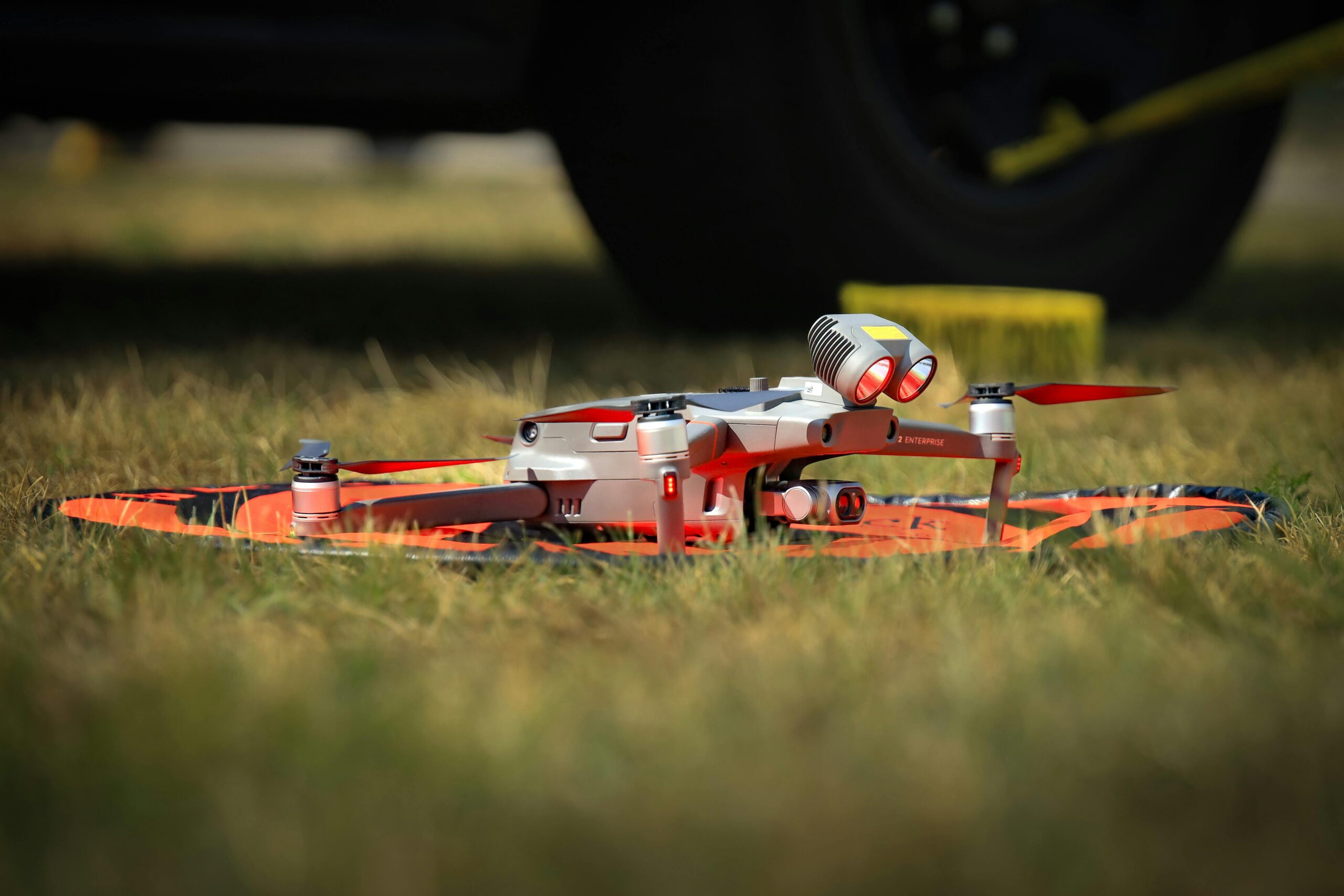
Autonomous systems face critical challenges when operating over extended periods and distances, making robust mapping techniques essential for reliable navigation and localization in complex environments.

🗺️ The Foundation of Long-Range Autonomous Navigation
Long-range autonomy represents one of the most demanding challenges in robotics and autonomous vehicle development. As systems traverse larger areas over extended periods, they accumulate positional errors that can compromise navigation accuracy and mapping consistency. The ability to maintain precise localization while constructing coherent environmental maps separates robust autonomous systems from those that fail in real-world deployments.
Modern autonomous platforms—from delivery robots navigating urban environments to agricultural drones surveying vast farmlands—rely on simultaneous localization and mapping (SLAM) algorithms. These systems must continuously answer two fundamental questions: where am I, and what does my environment look like? The complexity intensifies dramatically as operational distance and duration increase, introducing cumulative errors that threaten system reliability.
Understanding the mechanisms behind drift accumulation and implementing effective loop-closure detection strategies forms the cornerstone of successful long-range autonomous operations. These techniques enable systems to recognize previously visited locations, correct accumulated errors, and maintain globally consistent maps even after hours of continuous operation.
Understanding Drift: The Silent Navigation Killer
Drift refers to the gradual accumulation of small positional errors over time, causing autonomous systems to lose track of their true location. This phenomenon affects virtually all sensor-based navigation systems, regardless of sophistication or cost. Even high-precision inertial measurement units (IMUs) and wheel odometry systems experience drift due to sensor noise, calibration imperfections, and environmental factors.
The mathematics of drift are unforgiving. A seemingly insignificant error of 0.1% in distance estimation compounds dramatically over long trajectories. After traveling just one kilometer, this minor imprecision translates to a one-meter positioning error. Extend the journey to ten kilometers, and the uncertainty balloons to ten meters or more, rendering the system’s understanding of its position practically useless for precision tasks.
Primary Sources of Drift in Autonomous Systems
Sensor noise constitutes the most persistent contributor to drift. Every sensor measurement contains some degree of uncertainty, whether from electronic noise, environmental interference, or fundamental physical limitations. These small errors integrate over time, causing position estimates to diverge from ground truth progressively.
Wheel slippage presents another significant challenge, particularly for ground-based autonomous vehicles. When wheels lose traction on slippery surfaces, inclines, or loose terrain, odometry calculations become unreliable. The system believes it has traveled a certain distance when actual displacement differs substantially, creating immediate positional discrepancies.
Environmental factors like magnetic interference, GPS signal degradation in urban canyons or indoor spaces, and lighting variations for visual sensors all contribute to measurement uncertainties. These challenges multiply in complexity when systems operate across diverse environments during single missions.
🔄 Loop Closure: The Game-Changing Solution
Loop closure detection represents the most powerful technique for combating drift in long-range autonomous navigation. The concept is elegantly simple: when a robot recognizes it has returned to a previously visited location, it can calculate the accumulated error and distribute corrections across its trajectory and map.
Imagine an autonomous vehicle completing a circular route around a city block. Without loop closure, the system might believe its starting and ending positions differ by several meters due to accumulated drift. However, by recognizing landmark features from its starting location, the system confirms these positions should be identical, enabling it to correct the entire trajectory retroactively.
This capability transforms SLAM from an open-loop estimation problem prone to unbounded error growth into a closed-loop system with bounded uncertainty. Each successful loop closure event provides a constraint that anchors the map to reality, preventing drift from spiraling out of control.
Visual Loop Closure Techniques
Visual approaches to loop closure leverage camera data to recognize previously visited locations. Bag-of-words models represent one popular methodology, treating images as collections of visual vocabulary. The system extracts distinctive features from images and compares their patterns against a database of past observations, searching for matches that indicate revisited locations.
Deep learning has revolutionized visual loop closure in recent years. Convolutional neural networks trained on massive datasets can extract robust place-recognition features that remain invariant to lighting changes, seasonal variations, and viewpoint differences. These systems achieve remarkable accuracy even when revisiting locations under dramatically different conditions.
Feature descriptors like SIFT, SURF, and ORB provide another avenue for visual loop closure. By identifying distinctive keypoints in images and computing unique descriptors for each, systems can match locations even when viewing angles or environmental conditions have changed. The robustness of these descriptors to transformation and illumination variations makes them invaluable for real-world deployments.
LiDAR-Based Loop Closure Methods
Light Detection and Ranging (LiDAR) sensors offer different advantages for loop closure detection. Unlike cameras, LiDAR provides direct three-dimensional geometric information unaffected by lighting conditions. This makes LiDAR-based approaches particularly valuable for autonomous systems operating in challenging lighting environments or during nighttime operations.
Point cloud registration techniques form the backbone of LiDAR loop closure. Algorithms like Iterative Closest Point (ICP) and Normal Distributions Transform (NDT) attempt to align current sensor readings with previously recorded point clouds. When successful alignment occurs with low residual error, the system recognizes a loop closure candidate.
Scan context and intensity-based methods provide additional dimensions for LiDAR loop closure. These approaches encode the spatial distribution and reflectivity characteristics of environments into compact representations that enable efficient database searches and robust place recognition across large operational areas.
⚙️ Implementing Effective Drift Mitigation Strategies
While loop closure provides powerful error correction, comprehensive drift mitigation requires multiple complementary strategies working in concert. Relying solely on loop closure detection leaves systems vulnerable during extended periods without revisiting known locations—exactly the scenario common in true long-range autonomous missions.
Sensor Fusion for Robust Localization
Combining multiple sensor modalities creates redundancy and compensates for individual sensor weaknesses. Visual-inertial odometry fuses camera data with IMU measurements, leveraging the complementary strengths of each sensor type. Cameras provide rich environmental information but struggle with rapid motion and poor lighting, while IMUs excel at tracking fast dynamics but drift rapidly without external references.
Extended Kalman Filters (EKF) and particle filters provide mathematical frameworks for optimal sensor fusion. These probabilistic approaches maintain uncertainty estimates for all state variables, properly weighting sensor contributions based on their reliability and measurement noise characteristics. The result is position estimates that remain more accurate than any single sensor could provide alone.
Multi-sensor configurations might combine cameras, LiDAR, IMUs, GPS receivers, and wheel encoders. Each sensor contributes according to its strengths in current environmental conditions. When GPS signals degrade in urban canyons, visual and LiDAR systems maintain localization accuracy. When visual features become scarce in textureless environments, LiDAR geometry and IMU dynamics bridge the gap.
Graph Optimization and Pose Graph SLAM
Modern SLAM systems frequently represent the mapping problem as a graph optimization challenge. Each robot pose becomes a node in a graph, with edges representing spatial constraints from odometry measurements and loop closure detections. This formulation enables efficient global optimization of all poses simultaneously when new loop closures are detected.
The advantage of graph-based approaches lies in their ability to distribute correction across entire trajectories proportionally to uncertainty estimates. Rather than applying abrupt corrections that create map inconsistencies, graph optimization smoothly adjusts all affected poses to best satisfy all available constraints while respecting measurement uncertainty.
Libraries like g2o, GTSAM, and Ceres Solver provide robust implementations of graph optimization algorithms optimized for SLAM applications. These tools handle the computational complexity of optimizing graphs with thousands or even millions of nodes, enabling real-time performance on modern embedded computing platforms.
📊 Evaluating Mapping Performance and Success Metrics
Quantifying the success of drift mitigation and loop closure strategies requires well-defined performance metrics. Absolute trajectory error (ATE) measures the Euclidean distance between estimated and ground-truth robot positions across entire trajectories. This metric directly captures the practical impact of drift and the effectiveness of correction mechanisms.
Relative pose error (RPE) evaluates local consistency by comparing estimated and true relative transformations between nearby poses. While a map might exhibit global drift, strong RPE performance indicates the system maintains accurate local geometry—crucial for tasks like obstacle avoidance that depend on immediate environmental understanding.
Map consistency metrics assess the quality of generated environmental representations. Techniques like computing the variance of point cloud distances in overlapping regions or evaluating the sharpness of reconstructed surfaces provide quantitative measures of map quality independent of trajectory accuracy.
Real-World Performance Benchmarks
Standard datasets enable objective comparison of different SLAM approaches. The KITTI dataset provides extensive data from autonomous driving scenarios with ground-truth trajectories from GPS/IMU systems. Indoor environments are represented by datasets like TUM RGB-D, while challenging outdoor scenarios appear in collections like the EuRoC MAV dataset for aerial systems.
Performance on these benchmarks reveals important trends. State-of-the-art visual-inertial systems achieve trajectory errors below 0.5% of traveled distance on many sequences. LiDAR-based systems often perform even better in structured environments, with errors approaching 0.1% on favorable datasets. However, performance degrades significantly in challenging scenarios with aggressive motion, poor lighting, or feature-sparse environments.
🚀 Advanced Techniques for Extreme Long-Range Operations
As autonomous systems tackle increasingly ambitious missions—cross-country delivery routes, extensive agricultural surveys, or planetary exploration—conventional techniques reach their limits. Advanced strategies become necessary to maintain mapping reliability over truly extended operations.
Hierarchical and Multi-Session Mapping
Hierarchical mapping approaches divide large environments into manageable submaps with multiple abstraction levels. Local submaps maintain fine-grained detail for immediate navigation while global representations capture large-scale structure with reduced precision requirements. This approach limits the computational burden of optimization while maintaining necessary detail where it matters most.
Multi-session mapping enables autonomous systems to benefit from previous visits to environments. Rather than treating each mission as independent, systems can load prior maps and localize within them, immediately benefiting from past mapping efforts. Updated observations refine existing maps rather than building redundant representations from scratch.
Collaborative and Cloud-Connected Mapping
Multiple autonomous agents operating in shared environments can collaborate on mapping tasks, dramatically improving coverage and reducing individual drift through shared loop closures. When one robot recognizes a location previously mapped by another, both systems benefit from the constraint, creating a collective map more accurate than any individual could produce.
Cloud connectivity enables offloading computationally intensive optimization tasks to remote servers with greater processing power. Robots can upload sensor data and receive optimized pose graphs and maps in return, enabling sophisticated processing beyond onboard computational capabilities. This approach also facilitates centralized map databases accessible to entire fleets of autonomous systems.
🔧 Practical Implementation Considerations
Translating theoretical drift mitigation strategies into production autonomous systems requires careful attention to practical engineering challenges. Computational efficiency becomes paramount when algorithms must run in real-time on power-constrained embedded platforms.
Memory management presents another critical concern. Storing complete sensor histories for loop closure detection quickly exhausts available memory on long missions. Efficient data structures, selective keyframe retention, and lossy compression techniques balance loop closure capability against storage constraints.
False positive loop closures cause severe mapping failures, creating incorrect constraints that distort maps into impossible geometries. Verification mechanisms—geometric consistency checking, multi-hypothesis tracking, and conservative threshold selection—protect against these failure modes while maintaining sensitivity to true loop closures.
Choosing the Right Sensor Suite
Sensor selection profoundly impacts drift mitigation effectiveness and system cost. Budget-conscious applications might rely on visual-inertial combinations using commodity cameras and MEMS IMUs. These systems achieve respectable performance at low cost but struggle in visually challenging environments.
Mid-range systems add solid-state LiDAR sensors, combining visual richness with geometric robustness. The complementary nature of visual and LiDAR modalities provides resilience across diverse environmental conditions while remaining affordable for commercial applications.
High-end configurations incorporate survey-grade IMUs, multi-beam mechanical LiDAR systems, and dual-frequency GPS receivers with real-time kinematic correction. These premium systems achieve centimeter-level accuracy but cost orders of magnitude more than budget alternatives—justified only for applications with stringent accuracy requirements.
🌟 Future Directions in Long-Range Autonomous Mapping
The field continues rapid evolution, driven by advances in sensor technology, machine learning, and computational capabilities. Emerging solid-state LiDAR sensors promise automotive-grade reliability at dramatically reduced costs, democratizing high-performance 3D mapping for broader applications.
Learning-based approaches increasingly augment traditional geometric methods. Neural networks predict likely loop closure candidates, estimate uncertainty in sensor measurements, and even learn environment-specific motion models that reduce drift accumulation. These hybrid approaches combine the reliability of geometric methods with the adaptability of learned models.
Quantum sensors represent a potential paradigm shift for inertial navigation. Cold atom interferometers and quantum gyroscopes promise orders of magnitude improvement in drift performance compared to conventional IMUs, potentially enabling extended autonomous operations without any external references. While currently confined to laboratory environments, miniaturization efforts could bring these technologies to practical autonomous systems within the coming decade.
Building Robust Systems for Real-World Deployment
Success in long-range autonomous mapping ultimately depends on holistic system design that acknowledges real-world complexity. No single technique provides a silver bullet; robust performance emerges from carefully integrating multiple complementary strategies, each compensating for others’ weaknesses.
Extensive testing in target operational environments remains irreplaceable. Simulations provide valuable development environments but cannot capture the full complexity of real-world sensor behavior, environmental variability, and failure modes. Field testing reveals edge cases and challenges that drive iterative improvements toward production readiness.
The path to mastering long-range autonomy requires balancing theoretical sophistication with engineering pragmatism. Systems must be accurate enough to meet operational requirements while remaining computationally efficient, robust to sensor failures, and maintainable by field technicians. This balance defines the difference between impressive research demonstrations and autonomous systems that reliably deliver value in demanding real-world applications.
As autonomous technology continues maturing, drift mitigation and loop closure strategies will remain foundational capabilities. Whether deploying delivery robots in urban environments, agricultural drones over vast fields, or exploration rovers on distant planets, the principles of recognizing revisited locations and correcting accumulated errors will continue enabling autonomous systems to navigate confidently across distances that would otherwise remain beyond their reach.